Personal Computerという語句の定義の多様性
「Personal Computer(PC)とは何か?」という問いに対する答えは、時代や人によって多種多様である。「利用主体が個人である」という点は共通しているが、「home use向けだけでなく、business use向けを含めるのかどうか?」、「大型計算機のTSS(Time-Sharing System)利用を含めるのか?、スタンドアロン利用に限定するのか?」、「バッチ処理利用を含めるのか?、対話的利用に限定するのか?」などの点で見解が分かれ、PCの定義が多種多様になっている。
PCの定義として代表的なものは、以下のとおりである。
- 個人が利用主体であるコンピュータ
- Personal Computing遂行を目的としたコンピュータ
- 個人が自らの特定の課題・問題を解決するために使用するコンピュータ
- 個人が会社などの所属組織における自らの業務遂行のために使用するコンピュータ
- 個人事業主やフリーランスが業務遂行のために使用するコンピュータ
- 個人が個人的生活(家庭での趣味・学習・家計管理・ゲームなど)のために使用するコンピュータ
- 個人が自分一人で独占的に使用するコンピュータ
- 個人が自らの業務のために、自分一人で独占的に使用するコンピュータ
- 個人が自らの趣味など個人的生活のために、自分一人で独占的に使用するコンピュータ
- 個人が自分一人での対話的処理に使う装置
- ホストコンピュータのTSS利用のためのコンピュータ端末[インテリジェント端末だけでなく、ダム端末(dumb terminal)を含む]
- 端末利用ではなく、スタンドアロン利用のためのコンピュータ
「行為」
種別1 |
central computing |
departmental computing |
personal computing |
「利用形態」
種別 |
組織的利用
organizational use |
個人的利用
personal use |
「目的」
種別 |
「業務目的」利用
business use |
「生活目的」利用
home use |
「行為」
種別2 |
基幹的
業務 |
部門的
業務 |
個人的
業務 |
個人的
生活 |
「個人が業務で自分一人で独占的に利用できるコンピュータ」としてのPC
「Personal Computerとは何か?」という議論に際しては、「購入主体としての個人」という視点と、「利用主体としての個人」という視点の二つをきちんと区別しておく必要がある。すなわち、「個人が自分のポケットマネーで買えるコンピュータ」という価格的視点と、「個人が自分一人で独占的に使うコンピュータ」という利用的視点をきちんと峻別する必要がある。
さらにまた、「個人が自分一人で独占的に使うコンピュータ」に関して、その使用用途の違いに応じて、「個人が自分の趣味など個人的生活のために使うコンピュータ」と「個人が業務で自分一人で独占的に利用できるコンピュータ」を区別する必要がある。
筆者は、
佐野正博(2016)「PCの技術論的位置 —- ダウンサイジング論およびそれに対する批判論」で論じた、企業において個人が自分の業務(Work)のために「自分一人で独占的に使うコンピュータ」のことは、本来は、Personal Workstationと呼ぶ方が適切ではないか、と考えている。
ただしそうした定義は一般的ではない。個人が自らの業務で独占的に利用したミニコンピュータを「Personal Computer」とする記述には下記のようなものがある。
- 富田倫生(1994)『パソコン創世記』『パソコン創世記』阪急コミュニケーションズ、p.32
同書のp.32において「「後藤(富雄)はICテスターの開発を通じて、PDP-8を自分自身で独占することのできる「パーソナルコンピューター」として徹底的にしゃぶりつくしていった。」と記述している。本来的用途はdepartmental computing用途であるミニコンのPDP-8を、TK-80やPC-8001などの開発に携わったことで有名な後藤富雄が、個人的業務用途に使っていたことを示す記述。
- Voelcker, J. (1988) “1965 The PDP-8: The first ‘personal’ computer for engineers and scientists ushered in the minicomputer era,” IEEE Spectrum, Volume 25, Issue 11 , pp.86 – 92
本来的用途はdepartmental computing用途であるミニコンが、個人的業務用途に使われることもあることを示す資料
- Kidwell P.A., Ceruzzi,P.E.(1994) Landmarks in Digital Computing , Smithsonian lnstitution Press[(渡邉了介訳、1994)『目で見るデジタル計算の道具史』ジャストシステム]
「1962年、DECはMITのリンカン研突所と共同で、ワード長が12ビットのLINCというコンピュータを開発した。これは実験室の各種コントローラや、研究者が1人で使うコンピュータ(computer for a single researcher)という用途を想定していた。その意味ではLINCはパーソナル・コンピュータだったが、4万3,000ドルという価格では個人用に購入するのは無理だった。」(原著 p.77, 邦訳 pp.84-85)
1.最初のPCに関する諸候補の多数性 — 歴史分析のためのPC「定義」問題の重要性を示すものとしてのPC「起源」の多様性
最初のパーソナル・コンピュータ(Personal computer, 以下、PCと略記)をどのマシンとするかをめぐっては下記のSimon(1950)説、Kenbak-1(1971)説を初めとして様々な議論がある。
本稿では、personal computerとpersonal workstation、electronic desktop calculator、programmable calculatorを区別すべきである、という視点から議論を整理し、マイクロプロセッサを用いたAltair8800(1975)、Apple IIほか(1977)、Mark-8 (1974)、Micral N(1973)などのマシン、および、Alto(1973)、IBM5100(1975)などpersonal workstationの先駆的マシンに関して少し詳しく分析する。
詳しくは、
2技術史および技術論の視点から見たPC定義を参照されたいが、 personal computerとpersonal workstationという二つ語の定義は論者によってかなり異なる。
例えば極端な議論としては、「最初のコンピュータは、パーソナル・コンピュータであった。」(the first computers were personal computers)[Nelson D.L., Bell, C.G.(1986) “The Evolution of Workstations,” IEEE Circuits and Devices Magazine, July 1986,p.12]という議論がある。[この議論は、「歴史上最初期のコンピュータは、その創造者であるとともに、プログラマーでユーザーでもある個人が自らの特定の問題を解決するためのものであった」(dedicated to solving the specific problems of their creator/programmer/user)という意味で、最初期のコンピュータは、用途の面から見て”personal”なコンピュータであった、というものである。]
また、Personal Workstationという用語が広く用いられるようになるのは、1980年代になってからであると思われるが、ここではそのような歴史的用語としてではなく、歴史を記述し概念的に分析するための技術論的用語として主として用いる。(概念的には、「Personal computing用マシンで企業で業務用に使われるコンピュータ」という概念規定に対応するコンピュータを指すための語として用いる。)
雑誌
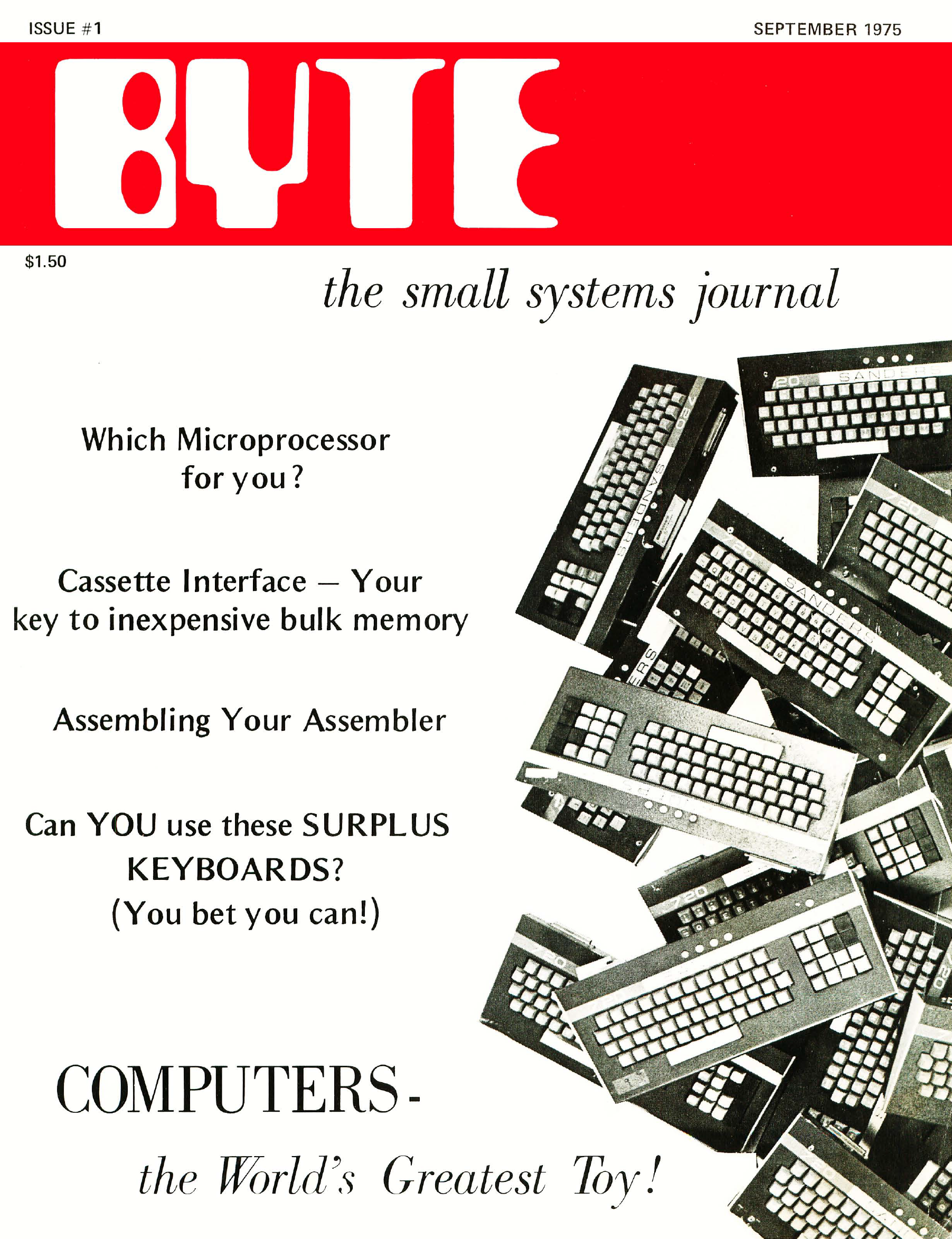
Byteの第4号(1975年12月号)のp.112のThe Byte Questionnaireでは、”What applications do you have in mind for
your own personal computer system?”, “If you own or use
a personal computer system, what is its CPU chip or main frame computer design?”というように、編集者の関心の対象が
personal computer systemにあることが強調されている。
雑誌
Byteの第2号(1975年10月号)のp.96のThe Byte Questionnaireでは”What is your primary interest In personal computing?”というように、
personal computer systemではなく、
personal computingという用語が使用されている。
Simon(1950)説
-
-
-
-
IBM650(1953発表、1954出荷)説
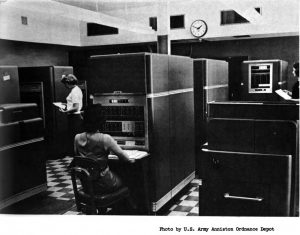
同WEB記事は、IBM650が「パーソナルコンピュータの最も古い原型(the earliest ancestor of the personal computer)」であるとしている。
というのも、IBM650以前のコンピュータ開発においては、新しく開発される機種は先行するコンピュータよりも計算能力が高いことをターゲットに開発されるのが一般的であった。
これに対して、IBM650は「手ごろな価格(affordable)で使いやすい」ということを目標に設計されていたからである。
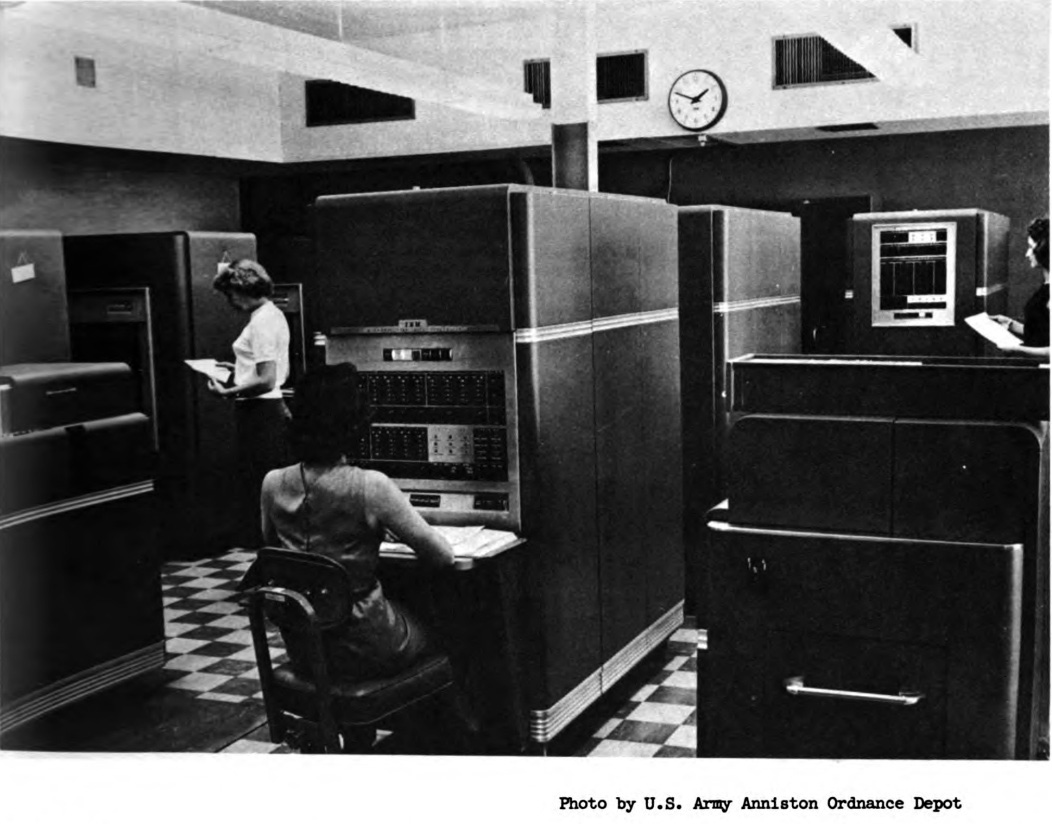
実際、1950年代後半に利用可能であった他の機種と比べれば、IBM650は、「安い」(約50万ドルという価格)、「小さい」(一つの部屋の中に収まる)、「ユーザーフレンドリーである」(2進法ではなく10進法でプログラムできた)という特徴を持っていた。
こうした意味でIBM650は「コンピュータ史において独自の位置を占めている」と、
Miller(2001)は主張している。
なおIBM650の販売台数は、約2,000台であった。
IBM650に関するIBM社の下記Webページから数多くの資料が入手できるようになっており、参考になる。
IBM650に関しては下記のcolunmbia大学のFrank da Cruzの下記Webページにわかりやすい写真や解説がある。。
IBM 650に関するその他の解説・参考資料
Miller, A. “IBM650” The Department of Mathematics & Computer Science at Mount Allison University
IBM Australia(2002) “1953 – IBM’s first computer, the 650, is released”
Weik, Martin H. (1961)「IBM650」in Weik, Martin H. (1961) A third survey of domestic electronic digital computing systems. Ballistic Research Laboratories Report No. 1115, Department of the Army Project No.5B03-06-002, Ordnance Management Structure Code No.5010.11.812, Aberdeen Proving Ground, Maryland, pp.350-389
The IBM 610 Auto-Point Computer(1957)説
-
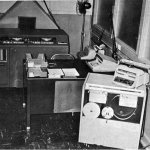
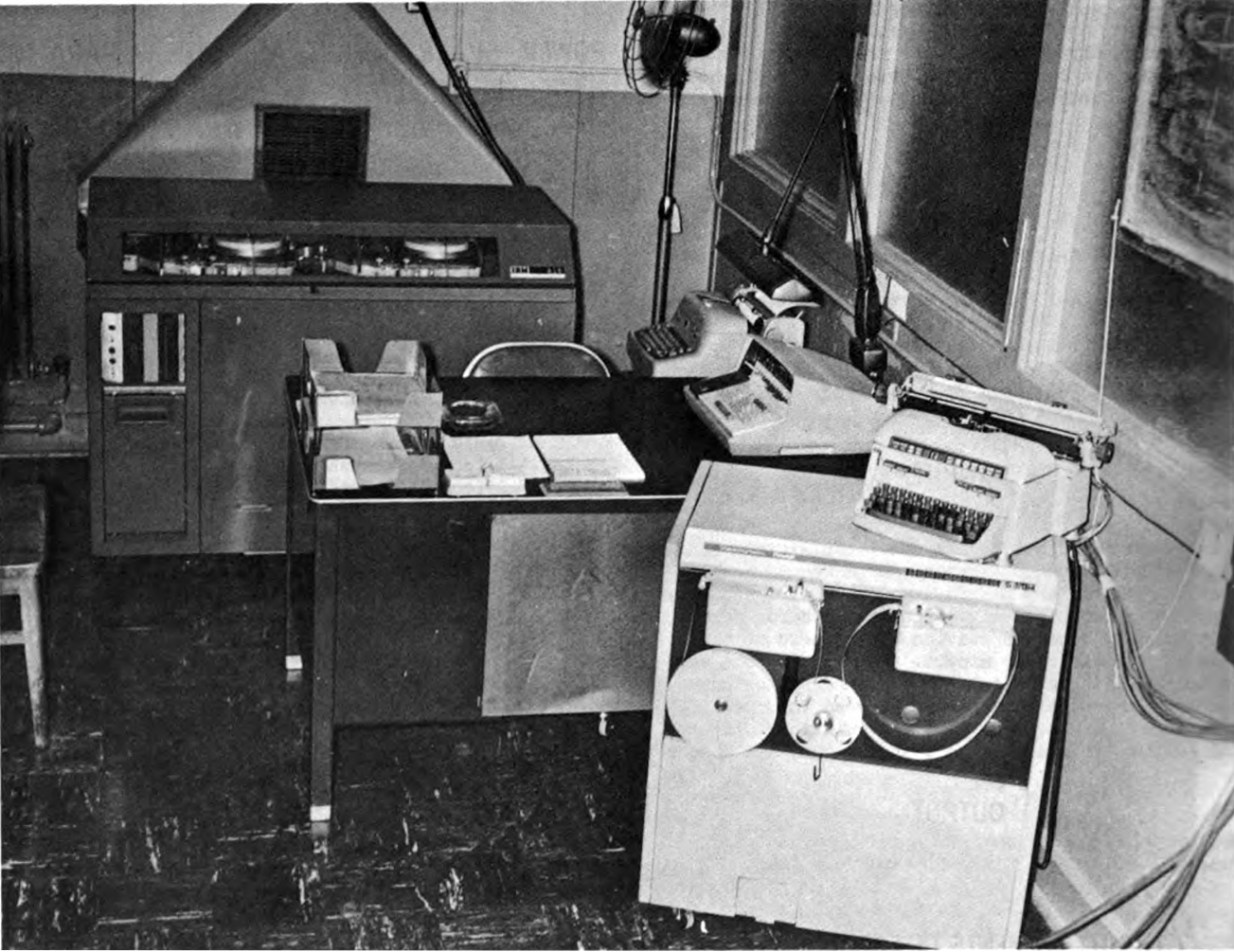
同記事では、IBM610は、「
(オフィスなどにおいて)一人の人間が利用することを意図したもので、なおかつ、キーボードで操作できる最初のコンピュータであったという意味で、最初のPCであった。」[The IBM 610 was the first personal computer,in the sense that
it was the first computer intended for use by one person (e.g. in an office) and controlled from a keyboard]としている。
また冷蔵庫サイズのBendix G-15 (1956)が「最初のPC(first personal computer)であると時々される」とした上で、「Bendix G-15は低価格であることを志向したものであるのに対して、IBM 610はpersonalであることを志向したものである」としている。また同じく「時々、最初のPCと呼ばれている装置」であるSimonに関しては、「機能が限定されたデモンストレーション装置」である、としている。[ Sometimes the refrigerator-size Bendix G-15 (1956) is called the “first personal computer”, but the 610 was running at least two years earlier. In any case the 610 was intended to be personal, whereas the G-15 was intended to be inexpensive.) (Another device sometimes named the first personal computer is Simon — also associated with Columbia University! — but it was a limited-function demonstration device.]
右図は同書のp.342に掲載されているIBM610システムの写真である。写真左手奥の大きなキャビネットの中に、「磁気ドラム、演算回路、紙テープ読み取り装置、および、紙テープに穴を空けてプログラムやデータを保存する装置」(a magnetic drum, the arithmetic control circuitry, a control panel, and paper-tape readers and punches for program and data )が納められている。
Olivettiの Programma 101(1965)説
-
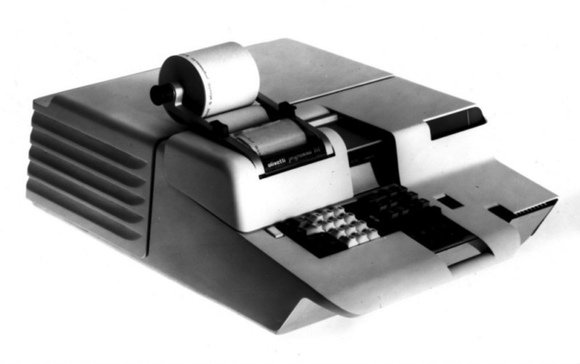
著者は、大型計算機が主流であった時代にRoberto Olivettiは「真に革命的な何かにトライしよう」と欲し、「より低価格で、普通の人々が使えるコンピュータ、通常の机の上におけるコンピュータ」すなわちデスクトップPCを創ろうと考えた[Roberto Olivetti, then-CEO of the company, wanted to try something truly revolutionary. He wanted Olivetti to make a small computer that was more affordable and could be used by regular people, something that you could place on a regular desk. He wanted to create a personal desktop computer.]としている。
HPのHP9100A(1968)説
-
Nelson,G. E., Hewlett, W.R. (1984) “The Design and Development of a Family of Personal Computers for Engineers and Scientists,” Proceedings of the IEEE Vol.72. No.3, March 1984, pp.259-268
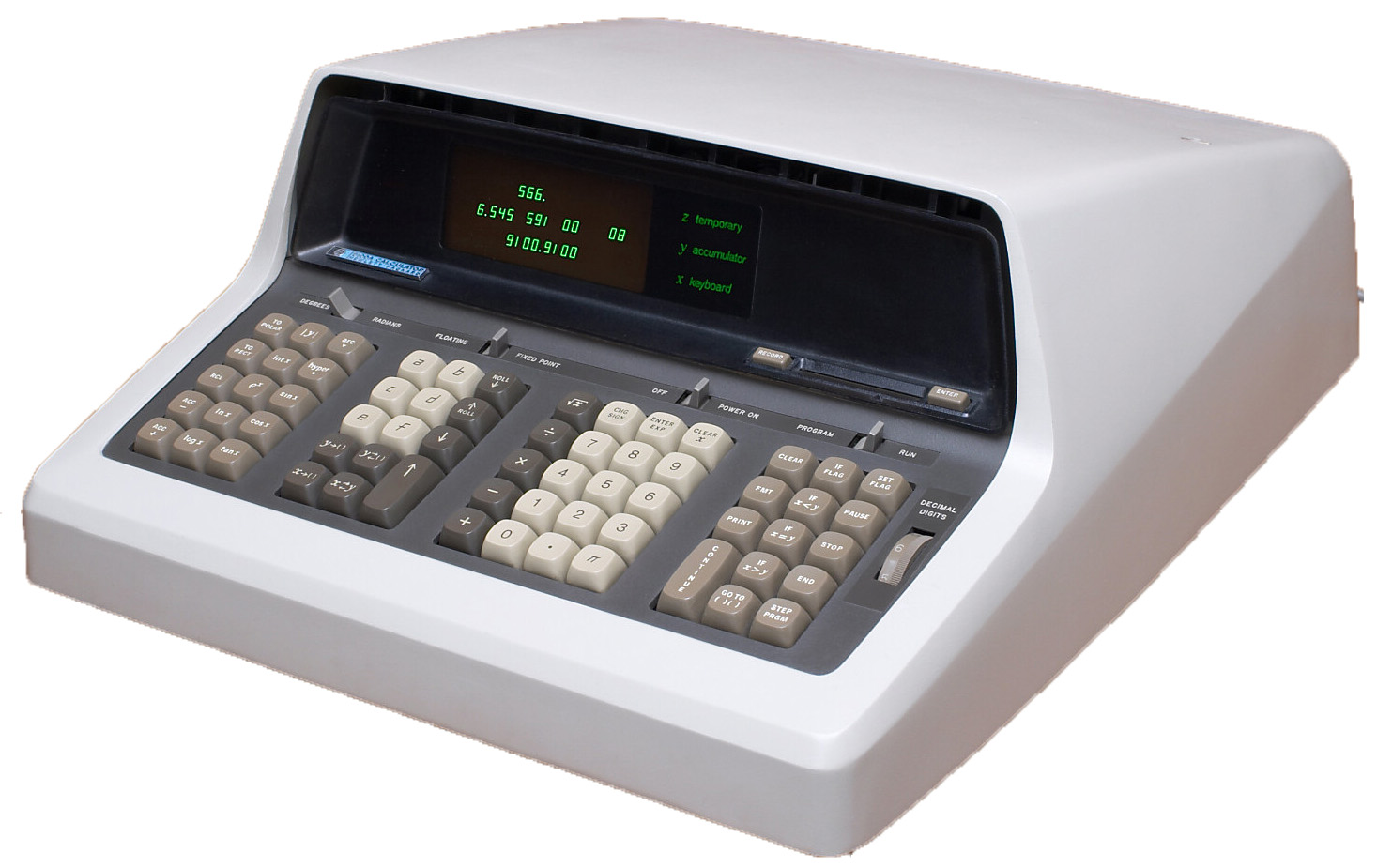
NELSONほか(1984,259)は、「ヒューレット・パッカードはエンジニアや科学者のための最初のパーソナル・コンピュータ、HP9100Aを1968年に売り出した」(”In 1968, Hewlett-Packard introduced its first personal computer for engineers and scientists, the HP 9100A.)と書き、HP9100A(1968)をHP最初のPCとしている。
NELSONほか(1984,259)によれば、HP9100Aは「マイクロプロセッサを利用していること」という基準を除き、Nilles,Jack M. Carlson,F. R. Jr., Gray,P., Hayes,J. P. and Milton G. Holmen (1980) A Technology Assessment of Personal Computers,Vols I, II,III,Office of Interdisciplinary Programs, University of Southern California, Los Angeles, September 1980が挙げているPCの基準を満たすとしている。(なお下記に紹介するように、Nillesほか(1980)の報告書それ自体は同基準を満たす最初のマシンをAltair8800である、としている。NELSONほか(1984,259)はそうした認定に対して若干の異議を唱えているのである。)
そしてそうした最初の製品HP9100A(1968)から、「メモリ容量(memory size)、多用途性(versatility)、価格性能比(performance/price)、使いやすさ(ease of use)」に関する性能向上がHP Series 200に至るまで三世代にわたってなされたとし、その製品進化(product evolution)を分析したのが同論文である。
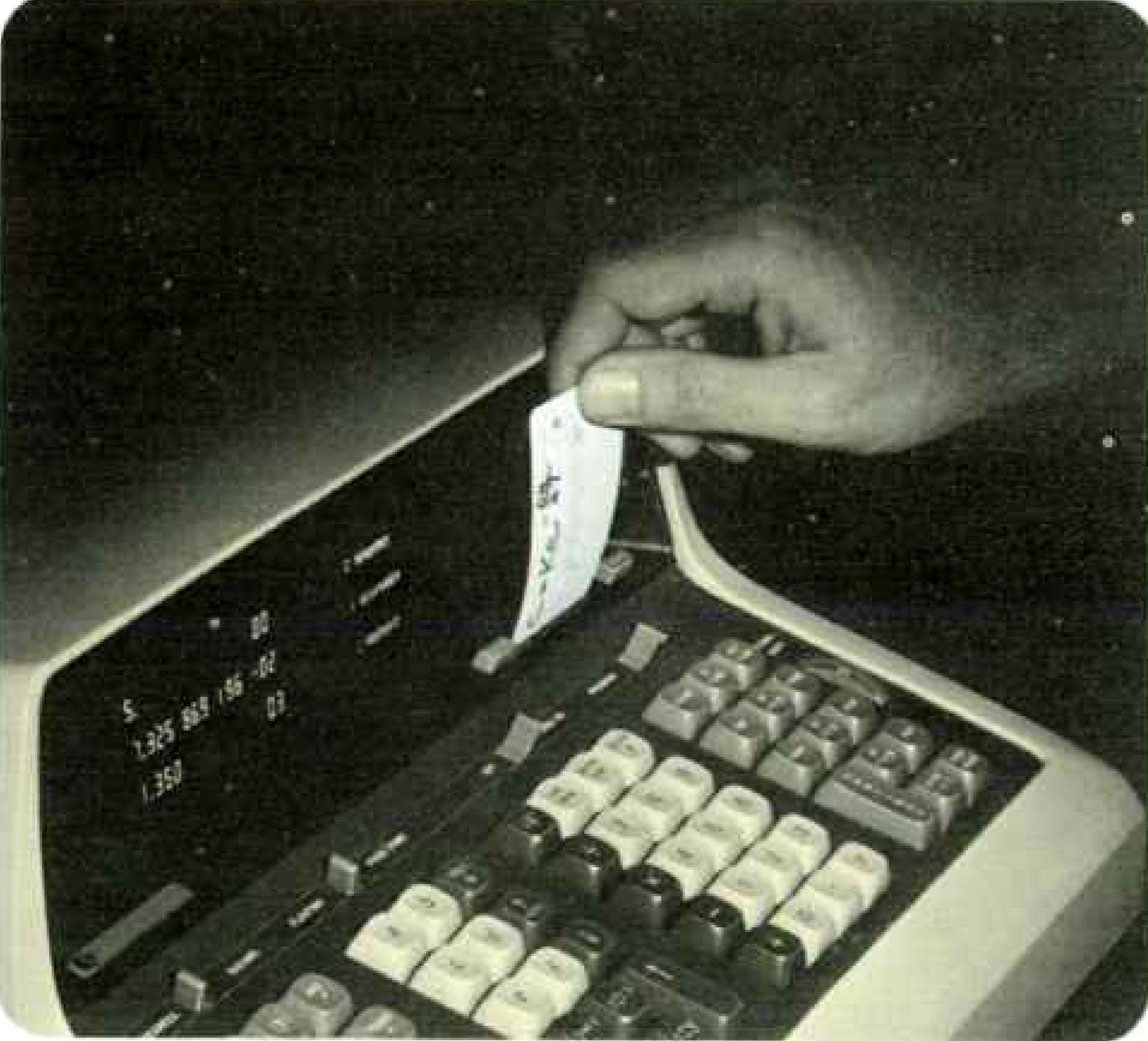
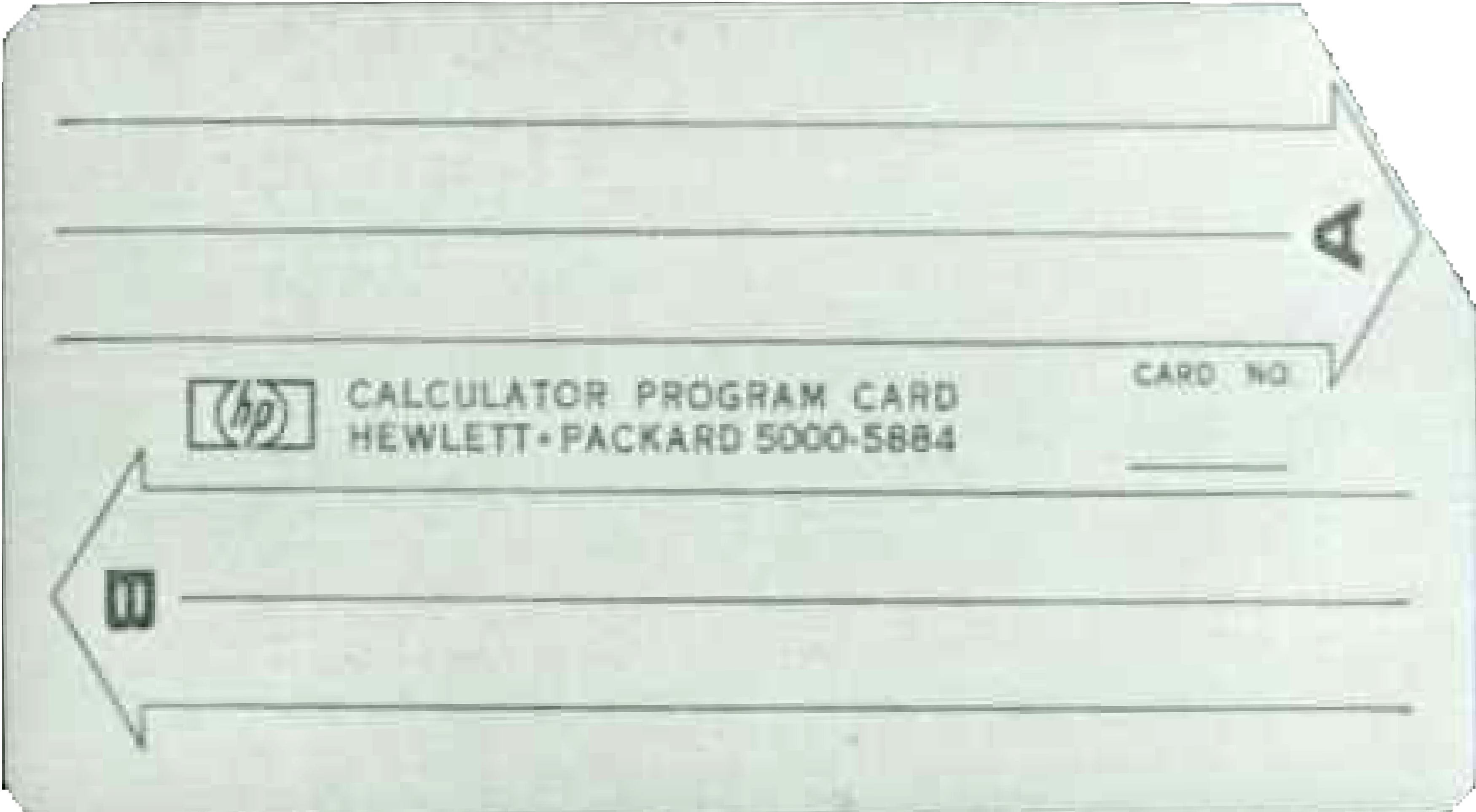
HP9100Aは上図の写真に示されているように、現代的な用語法で言えば、プログラマブルな多機能関数電卓と同一の外観である。ただしHP9100Aでは、無条件分岐、フラグ・算術比較による条件分岐、プログラムの停止・休止・ シングルステップ操作ができたし、「rectangular floppy disks」(長方形フロッピーディスク)と呼ばれている外部記憶装置、すなわち、プログラムおよびデータを読み書き可能な磁気カード(wallet-sized magnetic cards capable of holding up to two complete read/write memory images)による入力もできた。
rectangular floppy disksは、ビジネス、化学、エレクトロニクス、流体力学、生命科学、数学、物理学、統計、熱力学などに関する多様なアプリケーション・プログラムソフトの配布に利用された。5インチCRTを内蔵し、数字だけであるが、3行表示ができた。処理の実行時間は、加減算2ms、乗算12ms、割算18ms、平方根19ms、三角関数280ms、対数関数50ms、指数関数110msであった(Osborne,1968,p.9)。読み書き可能な内蔵メモリは、磁気コアメモリ(coincident current core memory)であり、1語6bitで368語、1語29bitで64語という容量であった。マイクロコードのためのプログラムROMの容量は1語64bitで512語であった(NELSONほか, 1984,p.259)。またHP9100Aの重量は18.1kgで、4,900ドルで販売されていた(Osborne,1968,p.9)。
HP9100関連資料
HP9100Aの特集号で下記のような記事が収録されている。
HP9100に関する解説、および、ダウンロード可能な画像がある
ダウンロード可能資料はほとんどないが、HP9100に関する解説、カタログ、マニュアルなどに関する情報が掲載されている
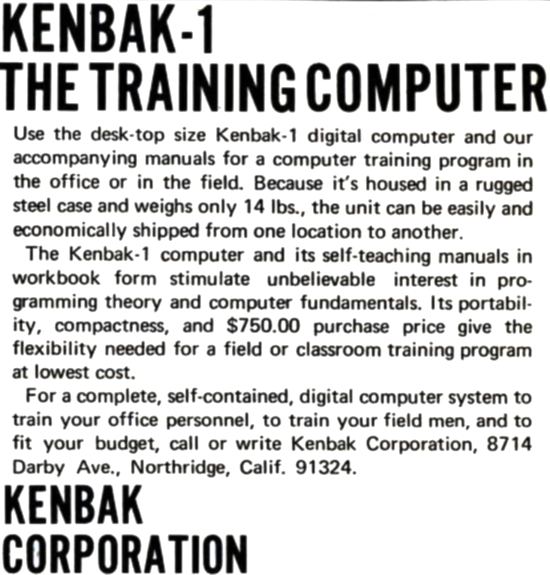
Kenbak社のKenbak-1(1971)説
-
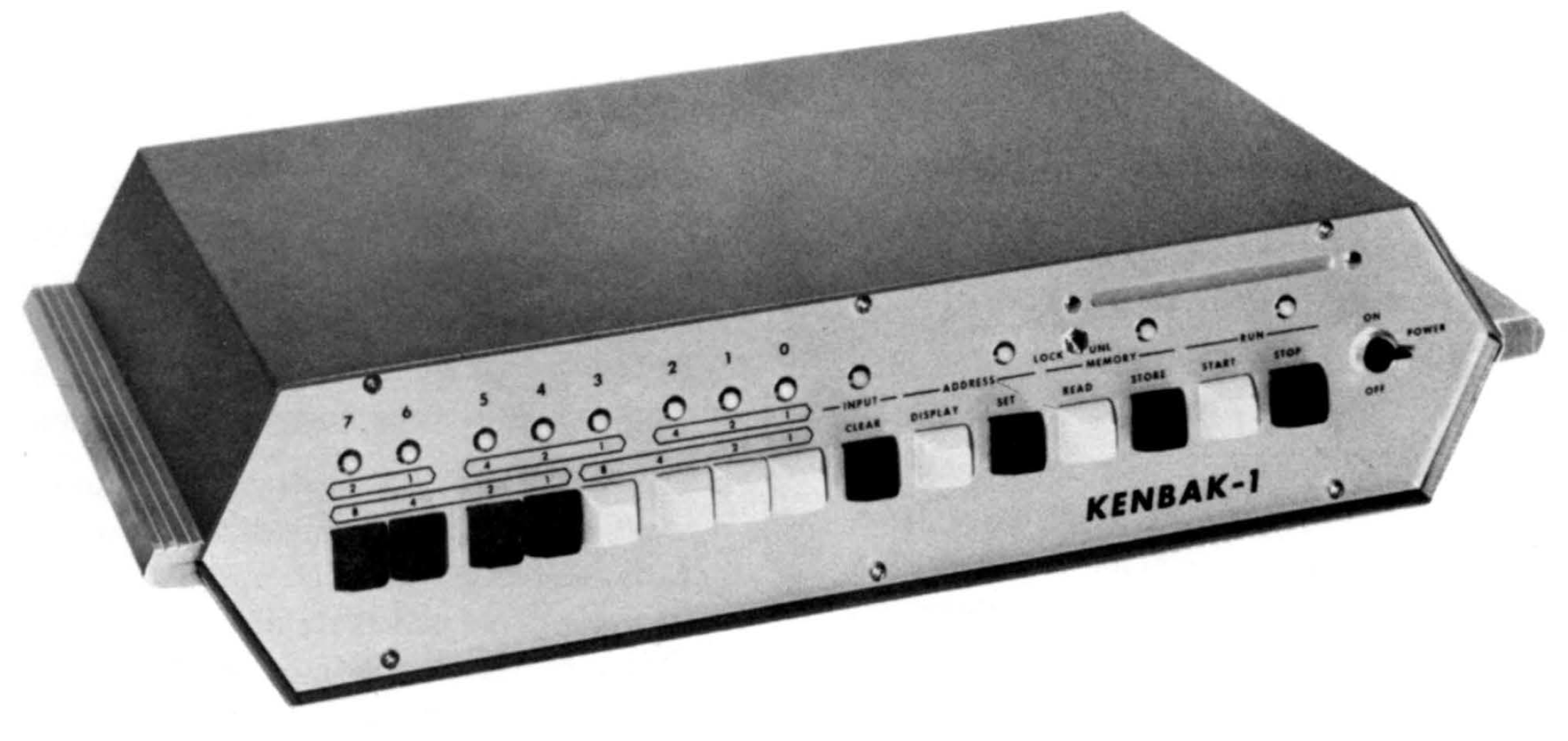
Wilson(2015)は、Kenbak-1(1971)を、「世界で最初の商用PC」(the world’s first “commercially available personal computer”)としている。
-
-
CARDIAC、BRANIAC、GENIACなどボード形式の教育目的のコンピュータやオモチャのキット、および、プログラマブルな計算機はPCの定義から外れる[In defining the personal computer,we excluded plastic or cardboard educational and toy kit ‘computers’ (such as CARDIAC, BRANIAC and GENIAC), as well as programmable calculators. ]とした上で、最初のPCは何かを論じている。
現在のPCにおいて一般的なキーボード、および、ディスプレイといったインターフェースに道を開いた重要な技術的発展として Don LancasterのTV Typewriter、および、Lee FelsensteinのVisual Display Moduleを位置づけている。( Don Lancaster’sTV Typewriter and Lee Felsenstein’s Visual Display Module paved the way to the keyboard and screen interface now universal on personal computers. )
そのうえで最初の商用PC製品(the early commercial products)として、 John BlankenbakerのKenbak-l(1971)を位置づけている。
-
斯波逸雄(1995)『ザ・CPUウォーズ:コンピュータシーンを揺るがす大きな小石』光栄、pp.30-31
「しかし、「アルテア」は決して最初のマイコンではなかった。1971年にジョン・ブランケンベイカーが製作した「Kenback-1」こそが世界初のパソコンとされている。これはスイッチと簡単な論理回路をつないだだけの簡単なものながら、750ドルもした。2年間でわずか40台程度を売ったに過ぎず、その後は忘れ去られていた。」
事務職員(Office Personnel)の訓練用コンピュータとして、$750で販売されたマシン。総生産台数は50台であった、と言われる。Kenbak社の宣伝文書によると、”The KENBAK-1 computer has been used alongside $25,000 computers in a university lab. The conclusion? The KENBAK-1 computer is an easier instrument to learn on, it is faster, it has more internal features, and it demonstrated the computing process more clearly.”とされている。
Kenbak社発行の資料的文書
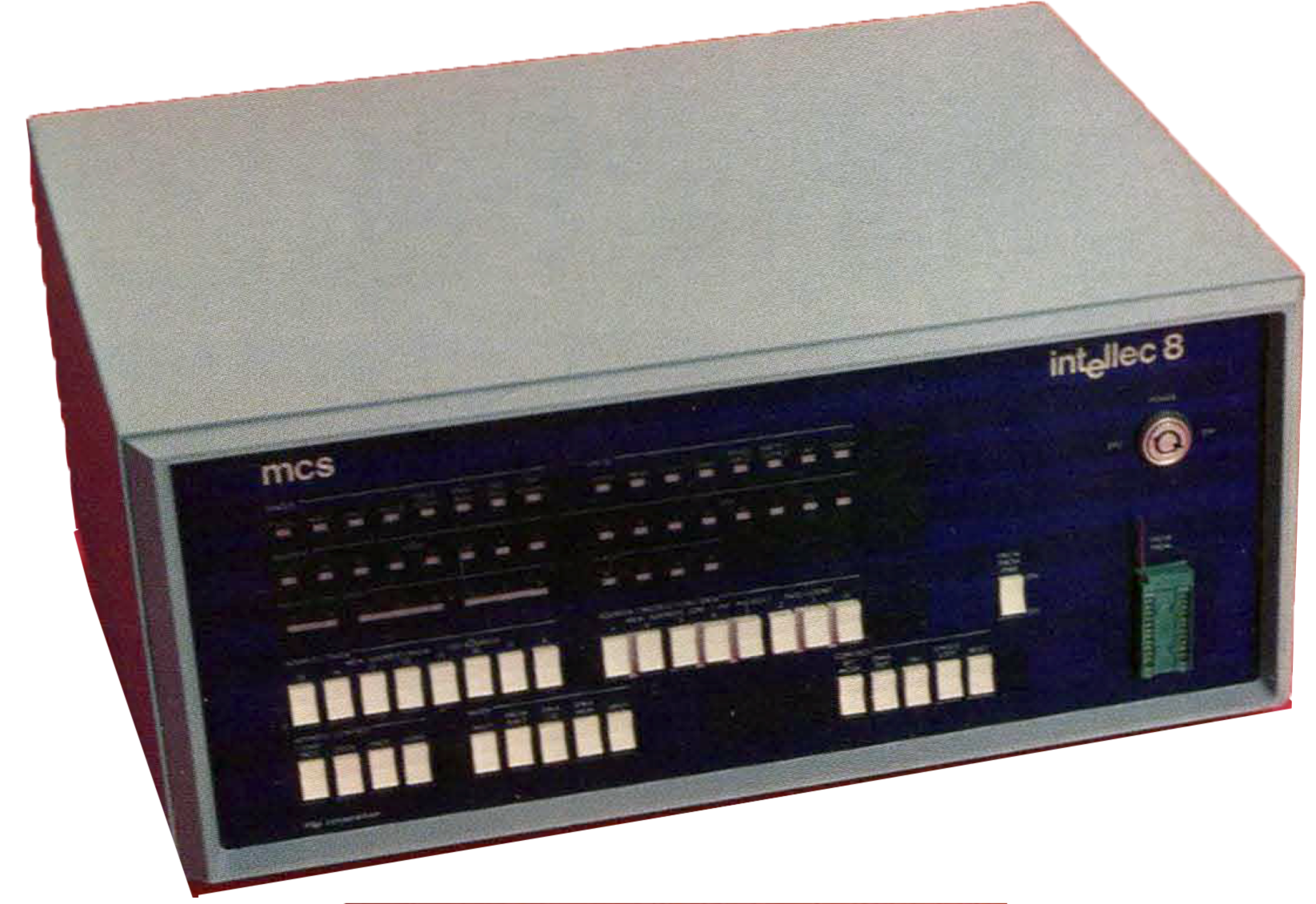
IntelのMCS-8(1972)説
IBMのSCAMP(1973)説
-
IBMのGeneral Systems Divisionが製作した試作機SCAMP(Special Computer, APL Machine Portable)を、「革命的コンセプト」(revolutionary concept)に基づく世界最初のPCであるとし、IBMはマイクロコンピュータ分野における後発者ではない、と論じている。[“The year 1983 marks the tenth annivaersary of a mileston in the history of computing – the creation of SCAMP, the world’s first personal computer. On this occation it seems fitting to recall SCAMP not only as an IBM project and as a device, but also as a revolutionary concept.” “IBM has been called a latecomer in the micro-business. In reality, Big Blue invented the personal computer 10 years ago – a little before the world was quite ready for it.”(Friedl,1983,p.191)]
2技術史および技術論の視点から見たPC定義
「最初のPCはどれなのか?」をめぐって様々な議論が存在するということは、「最初のPCをめぐる純粋に技術史的な認定」をめぐる問題だけでなく、「PCに関する適切な定義」をめぐる問題が存在することを示している。(同一の製品定義に基づいても「歴史的にどれが最初なのか?」をめぐる見解の差異が生じうるが、PCに関しては論者の視点によって製品定義が異なることが最大の問題である。)
PCという語の意味内容の社会的多重性と歴史的変容を的確に記述するための枠組に関する批判的検討のポイントとしては、下記のように「所有形態(購入形態)」、「利用形態」、「利用目的」、「使用場所」が挙げられる。
1) 個人が所有する(個人が購入する)コンピュータであり、企業や行政組織が所有するコンピュータではない
2) 個人が自分専用で利用するコンピュータであり、複数の人々と集団的に共用するコンピュータではない
3) 個人が自らの個人的業務や個人的ホビーのために利用するコンピュータであり、全社的業務・部門的業務のために使うコンピュータではない
4) 個人が自宅あるいは自室で使うコンピュータであり、会社などで使うコンピュータではない
なお「利用目的」は、さらに下記の二種類に分類される。
3-a 個人が自らの個人的業務処理のために利用するコンピュータ
3-b 個人が自らの個人的ホビーのために利用するコンピュータ
上記のポイントを押さえることで、PCという語の意味内容の社会的多重性と歴史的変容を分析するとともに、どのような意味でPCという語を用いるのがより適切なのかを記述目的との関連で明確化する必要がある。
すなわち、「PCに関する適切な定義」を論じる際には、「PCに関する適切な技術史的定義」、「PCに関する適切な技術論的定義」、「PCに関する適切な経営史的定義」、「PCに関する適切な経営学的定義」、「PCに関する適切な経済学的定義」、「PCに関する適切な社会学的定義」など定義をおこなう学問的視点の差異にも注意を払う必要がある。
(1) PCが満たすべき「基本」的要件
技術史および技術論の観点からは、PCが満たすべき必要な「基本」的要件としては下記のような二つを挙げることができる。
- 個人的情報処理作業(personal computing)をターゲットとして設計・開発されたマシン
- 家庭(home computer field, home use)での利用を想定として設計・開発されたマシン
上記の基本的要件2を認めるかどうかで、基本的な対立がある。すなわち、「personal computingという個人的情報処理」という視点のみに注目する立場(以下、立場1)と、「personal computingという個人的情報処理」を「仕事における個人的業務のための情報処理」と「家庭における個人的作業の情報処理」に二分し後者に特に注目する立場(以下、立場2)に分かれる。
立場1と立場2の「対立」は、単に用語の定義の差異という問題としても理解できるが、「社会的にPCと呼ばれているモノは何か?」「社会的にPCと呼ばれているモノは歴史的にどのような経路で形成されてきたのか?」という問題の側面もある。
筆者は立場2の立場に立ち、「仕事における個人的業務のための情報処理」を主目的に開発されたマシンをPersonal Workstationと呼び、「家庭における個人的作業の情報処理」を主目的に開発されたマシンをPersonal Computerと呼ぶ。
歴史的には、「仕事における個人的業務のための情報処理」を主目的に開発されたマシンとしてのPersonal Workstationという製品セグメントに属する製品が1960年代末から1970年代前半に先行して開発され、「家庭における個人的作業の情報処理」を主目的に開発されたマシンとしてのPersonal Computerという製品セグメントに属する製品がそれよりも少し遅れた1970年代中頃から開発が進んだ。
David L. Nelson および C . Gordon Bellは、Nelson D.L., Bell, C.G.(1986) “The Evolution of Workstations,” IEEE Circuits and Devices Magazine, July 1986, pp.12-15のp.12においてPersonal Workstationの歴史的展開を下記のように、1950年代の「アイデア(着想)」期、1960年代のアイデアの例証を目的に大型計算機を用いた「プロトタイプ」期、1970年代におけるグラフィック・ディスプレイを用いた「インタラクティブなマシン」の時代を経て、Personal Workstationという概念をテストするために実際に用いられたXeroxの1970年代のAltoというプロトタイプ、および、1981年にApollo、Sun、XeroxからPersonal Workstation製品(product)が登場した、としている。(“Personal workstations, like other man-made objects appear strictly evolutionary, going through well-defined stages including the initial idea (1950s); prototypes using large computers to demonstrate the idea (1960s); early but limited use of interactive graphics displays (1970s); working prototypes to test the concept (Xerox Altos-1970s); product introduction by Apollo, Sun, Xerox (1981); full-scale use with too many suppliers (1983); healthy industry beginning a supplier shakeout (1985);”)
ただしPersonal Workstationの延長線上に、Personal Computerが開発されたのではない。それゆえ「製品開発論史」的視点からはPersonal WorkstationとPersonal Computerを峻別することが重要である。
最初期のPersonal Computer製品に使用されたmoduleやtechnologyは、最初期のPersonal Workstation製品に使用されたmoduleやtechnologyとは歴史的に異なる系統のものである。
製品がターゲットとする市場セグメントで許容される機能・性能の最低限度、製品に対する十分なdemandが期待できる最高価格(製品がターゲットとする市場セグメントの価格帯の上限値)、半導体製造技術の技術的発展段階の違いや製品コンセプトの違いもあり、最初期のPersonal Workstation製品は最初期のPersonal Computer製品と異なるものとなったのである。
なお製品開発論的視点からは、当該製品を開発・製造する企業の事業的sustainability視点から見て確保すべき売上高(revenue)・利益額・利益率の最低値と、期待できる売上高(revenue)・利益額・利益率との関連も考慮すべきである。この問題は、「当該市場セグメントに属する製品の新規開発に必要な技術資源や資金力を持った企業がなぜその市場セグメントに属する製品の開発に積極的に取り組まないのか?」、「当該市場セグメントに属する製品をすでに開発済みであるにも関わらず、なぜその市場セグメントへの新規参入に積極的に取り組まないのか?」といったクリステンセンのdisruptive innovationの問題でもある。
NECのNEAC-M4(1969)やIBMのIBM 5100 Portable Computer (1975) がその大きさや重量において現代のタワー型デスクトップPCとほぼ変わらないにも関わらず、最初期のPersonal Computer製品とは異なり、microcomputerと呼ばれなかったのはそのことを象徴的に示すものである。
LSI技術を利用したmicroprocessorというmoduleの利用が最初期のPersonal Computer製品の際だった特徴である。最初期のPersonal Computer製品がmicrocomputerと歴史的に呼ばれたのはそのためである。
なお基本的要件2を満たすことは、歴史的には基本的要件1を満たすことであった。(現代では、Internet of thingsによるintelligent house systemなど、基本的要件2を満たすが、基本的要件1を満たさない製品も存在するが、その当時は一般的ではなかった。もちろん家電製品や自動車製品における組込型CPUシステムは家庭用途での情報処理マシンとしてマイクロプロセッサメーカーは認識していたが、社会的に広く認識されていたわけではない。数多くの既存技術者にとってもマイクロプロセッサは、「未知」のモジュールであったため、1970年代にはトレーニングキットとしてのマイコン・キットが開発・販売されたのである。)
アメリカのPC雑誌Byteの創刊号においてHelmers, C.T.(1975) “What is BYTE?,” Byte, Issue 1, September 1975, pp.4-6が“the home brew computer applied to personal use”(p.4)と記していることなどに示されているように、コンピュータを自作して低コストで自分専用の個人的コンピュータ、すなわち、パーソナル・コンピュータを作ることがその当時の一般的「マニア」の夢であった。
現代と異なり、自分専用の個人的コンピュータを持つことは、1970年代中頃当時は自作コンピュータ(home brew computer)による方法が最も適当なルートであった。コンピュータ本体は自作しないとしても、周辺機器との接続やアプリケーションソフトなどとの関係において自作的要素は必要であった。
Helmersが前記の論考に続けて書いているHelmers, C.T.(1975) “The Impossible Dream,” Byte, Issue 1, September 1975, p.6にあるように、「パーソナル・コンピュータを持つ」という昔からの夢(old dream of “having a personal computer.” )は、Intelの8008などのマイクロプロセッサの登場により実現可能になったのである。
こうした視点からは、下記に記すようにIntelのマイクロプロセッサを用いたMicral N(1973)、Mark-8(1974)、Altair8800(1975)などが最初のPCとされることになる。
(2) PCが満たすべき「付随」的要件
上記の基本的要件から派生する「付随」的要件として、下記のような諸要件を挙げることができる。
- (個人でも取り扱える、あるいは、各個人が1台を専用で使うに支障のない)軽量で小さなマシン[注1]
- (個人でも買える)低価格なマシン
- (普通の人々が)使えるマシン、あるいは、使いやすいマシン
[注1] 「軽量」性および「小ささ」には、室内に置く家庭用機器としての「絶対」的限界=適切性(室内に置く大型の家庭用機器としての代表例としては家庭用大型冷蔵庫があるが、それを超える重量・大きさのモノは許容されない。なおかつ書斎などに置くのであれば、家庭用小型冷蔵庫の重量・大きさが上限値として想定される)という問題と、考察の対象とする当該時点におけるコスト的および技術的に可能な「相対」的限界=適切性という問題を考慮する必要がある。
後者の問題は、製品セグメントの構成が歴史的にどのようなものであったのかという問題、すなわち、PCという製品セグメントに属する製品として必要な仕様・スペックの範囲(上限性能および下限性能)に関する歴史的意識のあり方はどうであったのかという問題である。
(3) broad target向けの、「汎用的」で「使いやすい」製品としてのPC
「(普通の人々が)様々な場面で使えるマシン、あるいは、使いやすいマシン」という上記の付随条件は、「購入してすぐに利用可能なこと」としてさらに下記のように具体化することができる。これらの条件を満たすかどうかが、製品セグメントの規定、および、製品の市場規模と関連している。
- 完成品であること(組立作業やハンダ付けなどの工作テクニックが不要なこと)
- 利用可能なソフトウェアがあること(開発プログラミング言語ソフトウェア、あるいは、アプリケーションソフトウェアがあること)
- 分かりやすい使用説明書・マニュアルがあること
3.最初のPCに関する主要な諸議論の検討
インテル社製のマイクロプロセッサーIntel8080を採用し、マイクロソフト社のBASICプログラミング言語ソフトウェアを最初に搭載したMITSのAltair8800(1975)を最初のPCとする見解が一般的であるが、アップルのApple II(1977)などを世界最初のPCとする見解も根強い。
さらにまた現在のPCがネットワーク対応でGUI採用のマシンであることを重視し、そうしたマシンの起源としてXerox社のAlto(1983)を最初のPCとする見解もある。
ここではそれに加えて汎用的マシンとしての実用性を持ち社会的認知に大きな貢献をしたIBMのIBM Personal Computer(1981)を最初のPCとする見解を取り上げる。
(1) 最初のPC=「Altair8800(1975)」説
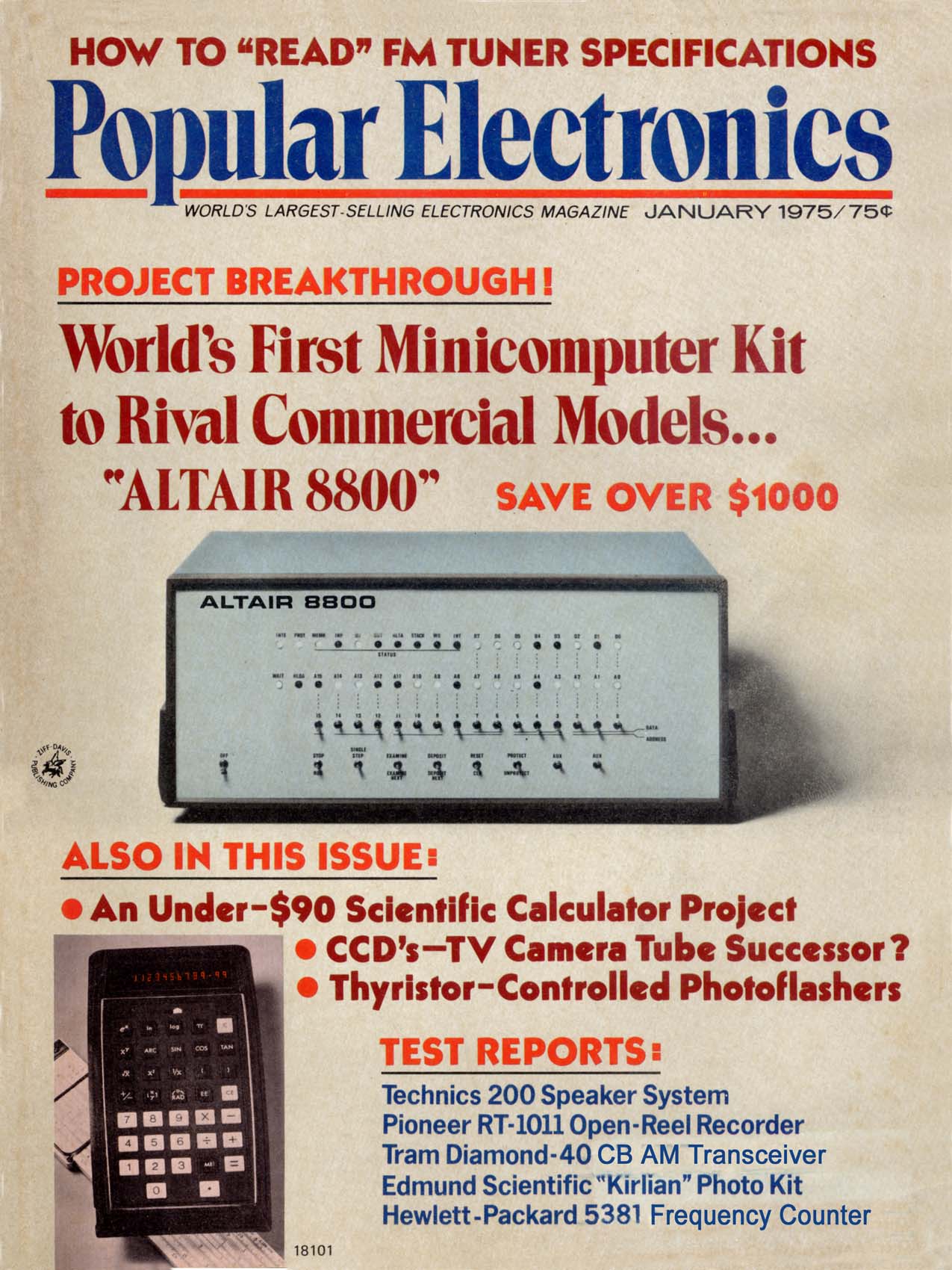
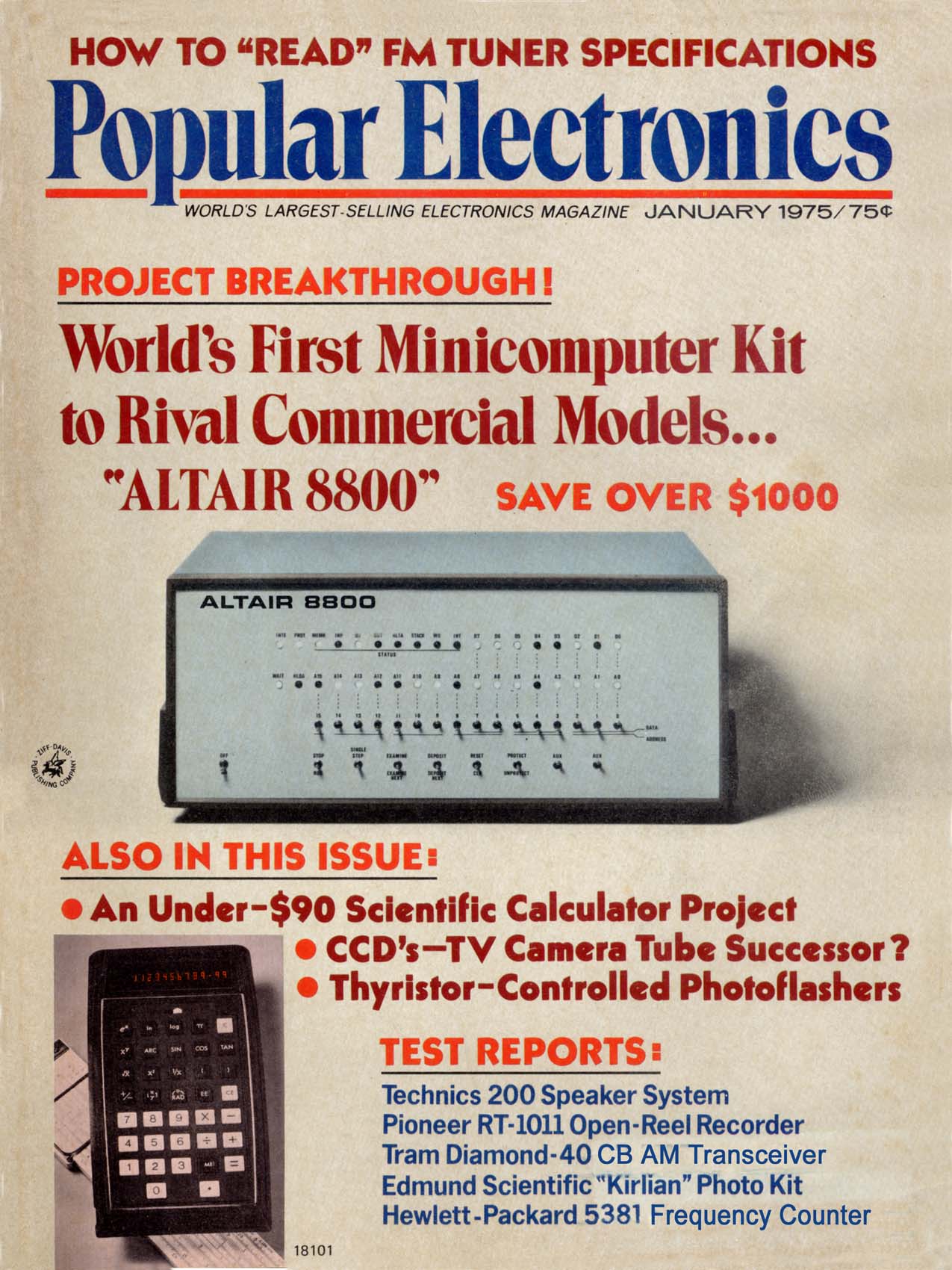
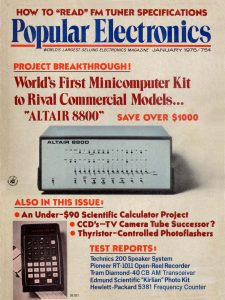 Popular Electronics
誌の1975年1月号の表紙 -
World’s First Minicomputer kit to Rival Commercial Models…”(市販のミニコンピュータと肩を並べる、世界最初のミニコンピュータ・キット)というキャプションを付けられたAltair8800
1. Altair8800を「最初のPC」とする議論
Nilles,Jack M. Carlson,F. R. Jr., Gray,P., Hayes,J. P. and Milton G. Holmen (1980) A Technology Assessment of Personal Computers,Vols I, II, III,Office of Interdisciplinary Programs, University of Southern California, Los Angeles, September 1980
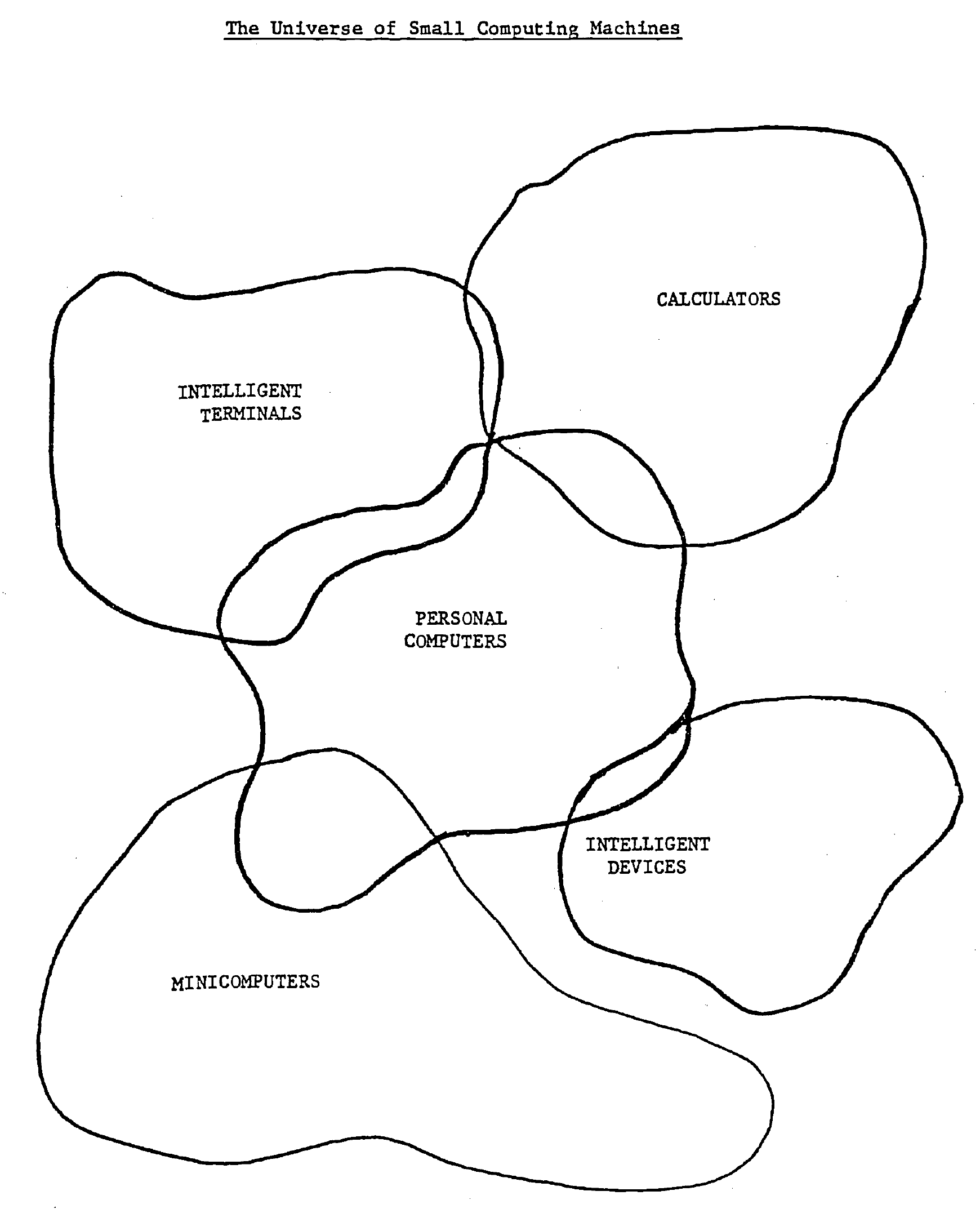
Nillesほか(1980)は、右図のように、小型の計算用マシン(small computing machines)として、calculators、インテリジェント端末 (intelligent terminals)、インテリジェント・デバイス (intelligent devices)、ミニコン(minicomputer)と並べてPCを挙げている。
この図に示されているように1970年代後半の時点では、計算用マシンとして小型であるという意味では、ミニコンもPCと同じく小型であった。したがって、PCとミニコンの区別のためには、小型性以外の要件が必要である。
|
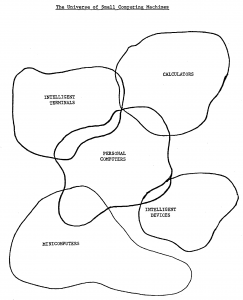
[図の出典]Nillesほか(1980) p.9 |
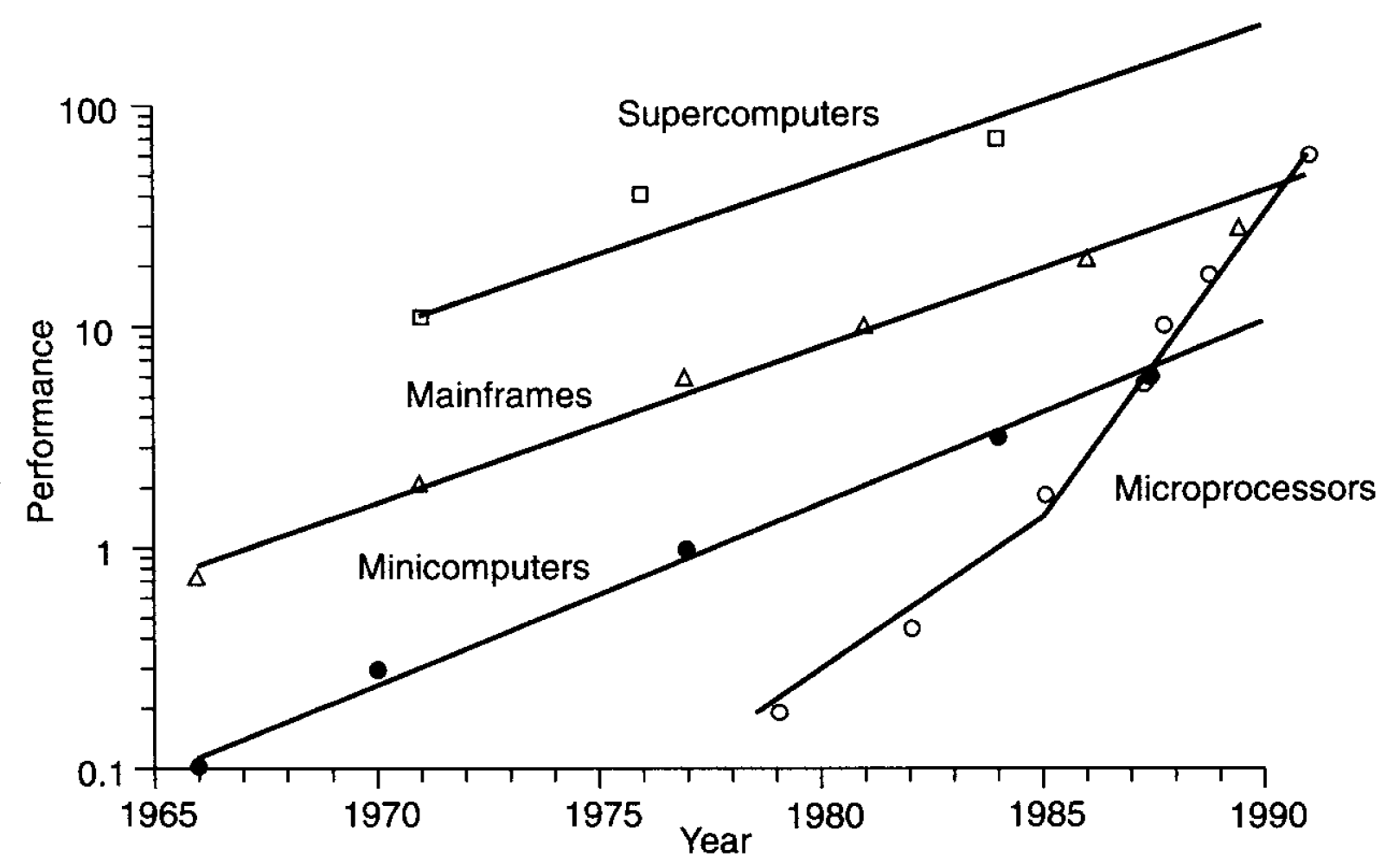
物理的サイズの小型化の流れ「メインフレーム → ミニコン → PC」の中で、ミニコンを小型化したものとしてPCを位置づけるようなダウンサイジング論もあるが、
「PCの技術論的位置 —- ダウンサイジング論批判」で論じたように、これはあまり適切ではない。
Nillesほか(1980)は、PCの要件の一つとして「小型」性を挙げながらも、それ以外にどのような要因が必要なのかを論じた最初期の著作である。
Nillesほか(1980)の議論は、下記で詳しく紹介したが、基本的にはPCの要件を適切に論じている。
Nillesほか(1980)は、個人利用という点では「スタンドアローン利用」、「インタラクティブなマシンであること」が、各個々人の個人利用を可能にする価格帯であることの必要性からは「低価格であること」が、利用が特定の専門家に限定されないという点では「汎用的であること」、「できあいのプログラム・ソフトウェアを利用できること」(Nillesほか(1980)は明示的に記載していないが、「コンピュータ技術やコンピュータ操作のための訓練を必要としないこと」ということを言い換えるとこのように表記できる)、「インタラクティブであること」などが必要となることを先駆的に論じている。
ただし「マイクロプロセッサを利用している」ことという条件は、「低価格」性という条件を満たすためのその当時の技術的条件として派生的な位置づけにすべきであると思われる。
同報告書Vol.Iのp.1(pdfファイルのp.6)では、「PCが何であるのか?」を記述するよりも、「PCが何でないのか?」を論じる方が容易であるとし、下図のような表でPCの位置づけを示すとともに、PCはポケット計算機、単なるコンピュータ端末、ホームセキュリティシステム、高価な大型計算機ではない、と論じている。そうした否定的規定に対応して、PCは下記のような特性を持つ、としている。
- 小型であること[small]
- 汎用的であること[general purpose computer]
- 先進的なマイクロ・エレクトロニクス技術を利用していること[using advanced microelectronics technology]
- 個人利用を想定して設計されていること[is designed to be conveniently operated by a single individual]
- コンピュータ技術やコンピュータ操作のための訓練を必要としないこと[ need not have extensive(or even any) prior trainingin computer technology or operation]
(Rather than try to describe what a personal computer 1s we more often find it easier to describe what itis not. The personal computer is not a pocket calculator, a simple computer terminalthat must be connected to a bigger computer somewhere, a smart device likea microwave oven or home security system, or a roomsized, expensive, impersonal machine (the image that flashes through the minds of most people when they hear the word “computer”). What is left, then? A personal computer is a small, general purpose computer, using advanced microelectronics technology, which is designed to be conveniently operated by a single individual,an individual who need not have extensive(or even any) prior trainingin computer technology or operation.)
また同報告書Vol.IIのp.1-1(pdfファイルのp.8)ではPCの特徴として、「スタンド・アローン利用」、「汎用的情報処理能力」、「個人にとって手頃であること」(affordable by an individual)を挙げながらも、PCは個人所有のコンピュータや、家庭利用のコンピュータに限定されない、としている。(Its greatest virtue is thatit is the most succinct term which still emphasizes one of the primary characteristics of the technology with which we areconcerned:the existenceof a stand-alone, general purpose information processing capability which is affordable by an individual. However, our study is not confined to computers that are solely owned by individuals, or to computers which are only used in the home, for that matter.)
さらに同報告書Vol.IIのp.9では、PCの要件として下記が挙げられている。
- スタンドアローンで利用するマシンであること[stand-alone]
- 汎用的コンピュータシステムであること[general purpose computer system]
- マイクロプロセッサを利用していること[containing one or more microprocessors]
- 個人あるいは小グループ(2人~5人)によって購入されるか、操作されるマシンであること[is purchased and/or operated by an individual or small (say, 2 to 5) group of individuals]
- インタラクティブなマシンであること[It requires interaction at a conversational level between it and its operators at least part of the time it is functioning(i.e., it is not used solely for process control or similar,non-interactive utility functions)]
- 個人がそのマシンの利用で個人的に得られる便益に応じた購入価格であること[ Its cost is such that the individual owner can justify its purchase on the basis of personally received benefits, financial or otherwise.]
- 個人的所有者はコンピュータの専門家である必要はない[The individual owner need not be a computer professional]
- コンピュータの利用目的は、レクリエーション、教育、ビジネスのためだけである必要はない[nor need the computer be used solely for recreational, eduational or business purposes]
A personal computer (PC) is an essentially stand-alone,general purpose computer system, containing one or more microprocessors, which is purchased and/or operated by an individual or small (say, 2 to 5) group of individuals.It requires interaction at a conversational level between it and its operators at least part of the time it is functioning(i.e., it is not used solely for process control or similar,non-interactive utility functions). Its cost is such that the individual owner can justify its purchase on the basis of personally received benefits, financial or otherwise.The individual owner need not be a computer professional nor need the computer be used solely for recreational, eduational or business purposes.
同報告書Vol.IIのp.1-2(pdfファイルのp.9)ではさらに、「手頃な」(affordable)ということを、相応のアプリケーション・ソフトの組み合わせで、500ドルから1万5千ドルの範囲内の価格(Clearly, there may still be a little ambiguity in this delineation of the problem area, but the key words that have guided our research thus far are “affordable” (that is, a personal computer is not a contemporary minicomputer but something which, together with a reasonable array of applications software, costs anywhere from $500 to $15,000)と規定している。
また同報告書Vol.IIのp.2-5(pdfファイルのp.17)では、上記のような基準を満たす「最初に大量生産されたPCという栄誉」はAltair8800に属するであろう(The distinction of being the first mass-produced personal computer(PC) probably belongs to the ALTAIR 8800 marketed in late 1974 by the small Albuquerque-based firm, MITS Inc.)、としている。
Kidwell P.A., Ceruzzi,P.E.(1994) Landmarks in Digital Computing , Smithsonian lnstitution Press[(渡邉了介訳、1994)『目で見るデジタル計算の道具史』ジャストシステム]
PCの要件として、「技術」的要件、「経済」的要件、「社会的認知」要件の3種類が必要だとして、「パーソナル・コンピュータという発明の理解には、「パーソナル」であるコンピュータの技術的側面(technical components)の理解とともに社会的(social)側面の理解を含んでいなければならない。パーソナル・コンピュータというからには、低コストかつ十分なコンピュータ能力という技術的かつ経済的な要請(requirements of low cost and sufficient computing power)を満たすだけでなく、その所有者にパーソナルな装置(personal device)だと認知してもらわなければならない。」 (原著 p.93、邦訳 p.101)と書いている。
そしてそうした立場から、LINC(1962)について、「1962年、DECはMITのリンカン研突所と共同で、ワード長が12ビットのLINCというコンピュータを開発した。これは実験室の各種コントローラや、研究者が1人で使うコンピュータ(computer for a single researcher)という用途を想定していた。その意味ではLINCはパーソナル・コンピュータだったが、4万3,000ドルという価格では個人用に購入するのは無理だった。」(原著 p.77, 邦訳 pp.84-85)として、技術的要件は満たしているが、その他の要件は満たしてはいないとしている。
著者達は、「「パーソナル」という言葉が意味するものを技術的にも社会的にも理解していた」集団としてhobbyistを位置づけるとともに、そのhobbyistのニーズに応えた最初のPCとしてAltair8800を挙げている。すなわち、Altair 8800が「パーソナル・コンピュータ時代の幕開けを告げた」(原著 p.94, 邦訳 p.103)と書いている。
なお、TRS-80, PET, Apple II は「Personal Computer:The Second Wave」(原著 p.96, 邦訳 p.106)の中に位置付けている。
Abbate, J.(1999) “Getting small: a short history of the personal computer,” Proceedings of the IEEE, 87(9), pp.1695 – 1698
「computingの歴史の大半は、政府、大企業、大学の研究者によって支配されてきた。しかしマイクロプロセッサからPCへの飛躍は、こうした集団によって成し遂げられたのではない。PC革命をスタートさせたのは、アマチュアのcomputer hobbyistたちである。」「最初のマイクロコンピュータはAltair8800であった」(p.1696)
Ceruzzi, P.E.(1998, 2003) A History of Modern Computing, MIT Press [(宇田理・高橋清美監訳,2008)『モダン・コンピューティングの歴史』,未来社]
「Altairの設計者のH. Edward Robertsが、PCの発明者としての称賛を受けるのにふさわしい」(p.227)、「Altairのような原始的な最初のPC」 (p.216)と書くとともに、Apple II を「PCの第二の波、1977-1985」(p.263)の中に位置付けている。
Ceruzzi, P.E.(2010) “‘Ready or not, computers are coming to the people’: Inventing the PC,” OAH Magazine of History, 24(3), pp.25-28
Ceruzzi(2010,p.26)ではAltair8800を「最初のPCキット」と呼んでいる。
矢田光治(1979)『マイコンが使えるまで』誠文堂新光社
「現在、いろいろのパーソナルコンピュータが市場に出回っているが、1975年1月に発表されたMITS社のAltairマイコンキットがその最初のものといえよう」(p.142)
脇英世(1998)『パーソナルコンピュータを創ってきた人々』ソフトバンク株式会社出版事業部
「世界初のパソコンであるオルテア-8800」(p.3)
Swedin, E. G., Ferro, D. L. (2007) Computers: The Life Story of a Technology,Johns Hopkins U.P.
Altair8800を「最初のPCとする」とする記述はないが、下記のような記述からAltair8800をそのように位置づけている、と判断できる。
p.xviiで、Altair8800を「PCをつくるための、商用のエレクトロニクス・キット」(an electronics kit to build a personal computer, dor sale)と記述している。
p.83で、8008ではなく8080が「最初のPCの基礎となった」(the basis of the first personal computer)としている。
p.90では、Altairによってmicrocomputer revolutionが始まった、としている
p.95では、IBM PC(1981)の登場でmicrocomputerがPCと呼ばれるようになった、としている。
Roberts, H. Edward (1995) “Roberts, Ed : in conversation with David Greelish” Computer History Museum, Catalog Number 102740010
MITSの創業者でAltair 8800の生みの親である技術者のEd RobertsもAltair8800が最初のPCである、と主張している。彼は、Intel8008を使用したMark-8は、Intel8080を使用したAltair8800に比べてアドレス可能なメモリ空間が小さい(CPU自体としてはIntel 8080が最大で64KBであるのにIntel8008が16KBと1/4である。Ed RobertsによればMark-8に搭載されていたメモリは8KBである)ことを根拠として、「そんなに小さいメモリでは何もできなかった。」「Mark-8はもともとはコントローラーとして企画され製造された」と批判し、「Altair以前にPCはなかった。AltairとともにPCが生まれた。」と主張している(Roberts,1995,p.16)。
なおその当時、CPUの命令処理能力に関してIntel8008は0.06MIPSと、その後継CPUのIntel8008の0.64MIPSの1/10以下と極めて低いことが問題とされていた。
Charles W. L Hill, Gareth R, Jones (2007) Strategic Management: An integrated Approach, Prentice Hall, p.192
Altair8800が商業的に成功した最初のPCであるとしている[”In 1975, the PC industry was born after new microprocessor technology was developed to build the world’s first commercially available PC, the Altair 8800, sold by MITS.”]
本稿は、「最初のPCが何であるとするかに関する主張は、数多くあるし定義に依存する。最初の小さなコンピュータの一つは、ヒューレット・パッカードが1972年につくったデスクトップモデルである。それは、[プログラミング]言語、記憶装置、キーボード、端末ディスプレイといった基本的なモノをすべて持っていた。しかしながらそれは科学者や技術者に向けてつくられたものであったため、一般市場で入手できるようなものではなかった。購入可能な最初のPCはAltairt8800である。」(The claims for the identity of the first PC are numerous and depend on definition. One of the first small computers was a desktop model built by Hewlett Packard in 1972. It had all the basics: a language, a memory storage device, a keyboard, and a display terminal. However, because it was built for scientists and engineers, it was not available on the general market. The first PC available for purchase was the Altair 8800.)としている。
ただし「一般市場向けに販売された組立済みの最初のPCはApple Iである」(The first PC that was fully assembled and offered for sale on the general market was Apple I.) としている。
2. Altair8800を「最初のPC」とすることへの反対論の論拠
- Altair8800は低価格ではあったが、図1のキャプションにあるように、完成品型ではなく組立作業が必要なマイコン・キットとして最初に発表された。
- テレタイプやキーボードなどの入力装置およびフロッピーディスク・ドライブ(以下、FDDと略)などの記憶装置を別途調達する必要があったが、それらはAltair8800本体価格の3 – 4倍とかなり高価格であった。
- 発売初期にはそのマシン上で動作するプログラミング言語ソフトがなかった。
[注] アメリカのPC雑誌Byteの創刊号(September 1975) p.7のAltair社の広告によれば、Altair8800本体のキット価格$439に対して、テレタイプASR-33の価格が本体価格の3倍以上の$1,500になっている。Byte,No.4(Dec. 1975) p.49のAltair社の広告によれば、コントロール装置、デバイス・ドライバー・ソフトウェア付きFDD装置も、キット$1,480、組立済$1,980と高価格であった。
3. Altair8800は「最初のPC」ではないが、「商業的に成功した最初のPC」とする議論
Allen, R.A.(2006) “What Was The First Personal Computer,” in Allen, R.A. A Bibliography of the Personal Computer: the books and periodical articles, Allan Pub., pp.73-82
IBM 610 Auto-Point Computer(1957)を最も最初のPCであるとする一方で、「商業的に成功し、”personal” technological revolutionを始めた最初のPC」はCPU性能、BASICプログラミング言語ソフトウェア、低価格性からしてAltairである(p.80)と主張している。
なお富田倫生(1994)『パソコン創世記』阪急コミュニケーションズも、巻末の年表の2頁目で、Altair8800を「大衆的なパーソナルコンピューター運動に火をつけ」たマシンとして記している。(富田倫生(1994)『パソコン創世記』では、何が最初のPCであるのかは明示的には記載されてはいないが、「後藤はICテスターの開発を通じて、PDP-8を自分自身で独占することのできる「パーソナルコンピューター」として徹底的にしゃぶりつくしていった。」(p.32)というような表現からは、personal computing用マシンとして「パーソナルコンピューター」を規定しているように思われる。)
(2) 最初のPC=「1977年のApple IIほか」説
江村潤朗編(1986)『図解 コンピュータ百科事典』オーム社
Altair8800はPCのルーツ(p.147)ではあるがキットであるからPCではないとしてApple II、PET2001、TRS-80などとともにPC時代が始まったとしている(p.137, p.147 , p.166)
滝田(1997)『電脳のサムライたち ― 西和彦とその時代』実業之日本社
滝田(1997,p.6)も、「1977年、パソコンの歴史はこの年にはじまる。『アップルⅡ』(アップル社)、『PET2001』(コモドール社)、『TRS80-1』(タンディ社)が発売された1977年がのちに”パソコン元年”と位置づけられることにより、それ以前の歴史は前史となり、この年を境にパソコンがその歴史を刻みはじめることになる。」というように、Apple II、PET2001、TRS-80が発売開始された1977年がPC元年である、としている。
Campbell-Kelly, M., Aspray, M.(1996) Computer : a history of the information machine, BasicBooks[(山本菊男訳,1999)『コンピューター200年史』海文堂出版]
Popular Electronics, January 1975の表紙などの記述を根拠として、「Altair8800は、よく最初のPCと記述されるが、これはその値段が非常に安かったので個人が買うことができたという意味でのみ正しい。それ以外はすべての点でAltair 8800は伝統的なミニコンであった」(原書p.240, 邦訳pp.244- 245)とし、1977年にPC時代が始まった、としている。
John Markoff(1996) What the Dormouse Said: How the Sixties Counterculture Shaped the Personal Computer Industry, Penguin Books[ジョン・マルコフ(服部佳訳,2007)『パソコン創世 第3の神話』NTT出版]
本書は、personal computing用のマシンを、PCとする立場に立っており、序文の中で、下記のように書いている。
「personal computingの発明に関してよく見られる二つの見解がある。/第一の見解は、PCを、Stephen WozniakとSteven Jobsという、computer hobbyistからentrepreneurになった二人の若者に根差すと、するものである。」(p.1)(“There are, generally speaking, two popular accounts of the invention of personal computing. The first roots the PC in the exploits of a pair of young computer hobbyists–turned–entrepreneurs,Stephen Wozniak and Steven Jobs.”)
「第二の見解は、1970年代初頭の伝説的なパロアルト研究所がpersonal computingの生誕の地である、とするものである。・・・今日のデスクトップ・コンピュータおよびポータブル・コンピュータの先駆けとなる、Altoと呼ばれるコンピュータが[同研究所に]集められた有能な人材たちによって、生み出された。」(p.1)(”The second account locates the birthplace of personal computing at
Xerox’s fabled Palo Alto Research Center in the early 1970s. There, the
giant copier company assembled a group of the nation’s best computer
scientists and gave them enough freedom to conceive of information
tools for the office of the future. Out of that remarkable collection of
talent came a computer called the Alto, the forerunner of today’s
desktops and portables. “)
SE編集部編(1989)『僕らのパソコン10年史』翔泳社
Altair8800を「最初のマイコンキット」(p.11)とするとともに、1977年に「最初の個人用コンピュータがアメリカで製品化された」(p.11)としApple IIからパーソナルコンピュータの歴史が始まった(p.12)としている。
SE編集部編(2010)『僕らのパソコン30年史』翔泳社
p.16の見出しは、「1977年はパーソナルコンピュータ元年、アップルII、PET2001、TRS-80が発売」となっている。
山田昭彦(2014)「パーソナルコンピュータ技術の系統化調査」『国立科学博物館技術の系統化調査報告』Vol.21, pp.217-319
Apple IIが「最初のパーソナルコンピュータとされている」(p.221)としている。
Rogers, E.M., Larsen, J.K. (1984) Silicon Valley Fever, Basic Books[ロジャーズ, E.M.,ラーセン, J.K.(安田寿明、アキコ・S・ドッカー共訳、1984)『シリコン・バレー・フィーバ』講談社, p.21]
「アップル・コンピュータ社、タンディ・ラジオ・シャック社、そしてコモドール社のおかげで、パーソナルコンピュータ市場が出現した」(原書p.5, 邦訳p.21)としている。
(3) 最初のPC=「ゼロックス社のAlto(1973)」説
1. Alto(1973)を「最初のPC」とする議論
基本的要件の2、および、付随的要件の2は満たさないこと、および、市販されていない製品であることから、最初のPCとすることへの反対論も根強い。
しかし、ネットワーク、レーザープリンター、マウス、GUIなどその設計思想の斬新性で現代的PCの祖形ともいえるマシンであることから、実用化された最初のPCと強く主張する論者が下記のように少なくない。
Smith, D.K., Alexander, R.C. (1988) Fumbling the Future: How Xerox Invented Then Ignored the First Personal Computer, William Morrow[山崎賢治訳, 2005『取り逃がした未来 ― 世界初のパソコン発明をふいにしたゼロックスの物語』日本評論社]
Smithほか(1988,p.5)
喜多千草(2005)『起源のインターネット』青土社
喜多千草(2005)は、PC定義の問題を意識的に取り上げており、Ceruzzi, P.E.(1998, 2003)が「使いやすさ」と「安さ」の2点をPCの定義としているとした上で、
「安さ」ではなく、「使いやすさ」という視点からPC定義の問題を論じている。(pp.13-15)
すなわち同書は、「階層的なネットワークと、その端末におけるパーソナル・コンピューティングのスタイルができあがってゆく過程」(p.12)を描くことを意図したものであり、Altoを中心とするアルト・システムの持つインターネット技術史上の重要性を、「時分割処理システムの発展的解消」としての「小型コンピュータのネットワークシステム」という点に求めている。すなわち、Altoによって、LAN「端末のコンピュータ利用スタイル(パーソナル・コンピューティング)の誕生」(p.13)がなったとしている。
言い換えれば同書は、以下の引用文に示されているように、Personal Computingの意義をLAN端末としての個人的利用に位置づけており、PCの基本的要件としてネット利用可能性がある、とする立場に立っている。
「時代は90年代も半ばになると、本格的なインターネット普及の時代にはいり、パーソナル・コンピュータを持つということ自体よりも、ネットワークにつながった端末としてパーソナル・コンピュータを使うというスタイルこそが真に論ずべき対象であったという認識が生まれる。このとき改めて、アルトが単体のコンピュータとしてではなく、ネットワーク端末用のパーソナルなコンピュータとして生まれたという事実が、歴史的に再評価されることになった。なぜなら、アルト・システムは、アルトというそれだけで斬新なスタイルをもったパーソナルなコンピュータを、イーサネットというネットワークの方式でつないだローカルなネットワークであったからである。同種のコンピュータをつなぐネットワークは他にも存在したが、このアルト・システムでは、アルトを端末のクライアントとしたファイル・サーバ、プリンタ・サーバ、メール・サーバ、ネットワーク・サーバをもった、最初期のクライアント・サーバ・システムを実現し、さらに、他社のコンピュータ・ネットワークとの接続や、時分割処理システムの広域ネットワークであるARPAネットとの接続のための、階層的なプロトコルを備えていた。つまりアルト・システムは、インターネット時代のパーソナル・コンピューティングのひな形だったのである。」(p.15)
2. Alto(1973)を「最初のPC」とする議論への反対論
基本的要件の1を満たす、十分な実用的性能を持ったマシンとしては、確かにAlto(1973)が最初期である。すなわち、Alto(1973)がPersonal computing用途の最初の実用的マシンであることは確かである。
しかし「業務」用マシン(Workstation)であるという点に着目すれば、下記のように
AltoはPersonal computerではなく、Personal Workstationとして位置づけるべきであろう。
a. Alto=「Personal Workstation」説 — Bell(1988)
Altoは、その処理用途および製造コストから考えれば、Bell(1988, 原書p.6, 邦訳p.8)の記述のように、パーソナル・ワークステーションの歴史的流れの中に位置づけるべきマシンである。
Bell, G. (1988) “Toward a History of (Personal) Workstations,” in Goldberg, A.(ed.)
A History of Personal Workstations, Addison-Wesley Professional, pp.4-36 [ACMプレス編(村井純・浜田俊夫訳,1990)『ワークステーション原典』アスキー, pp.6-52]
ただしBell自身は、PCの基本的要件として1のみを想定し、「パーソナル・ワークステーションは、(50ポンド[22.8kg]以上と)相対的に重く、かつ高価なパーソナル・コンピュータである」[A personal workstation is a relatively large (greater than 50 pounds) and expensive ($10,000 to over $100,000 in 1985) personal computer, with the appropriate transducers, used by a professional to carry out generic (e.g., calculation, mail, and communication) and profession-related activities such as music composition, financial modeling, or computer-aided design of integrated circuits.]というように、
Peronal WorkstationはPersonal Computerの一種であると規定している。
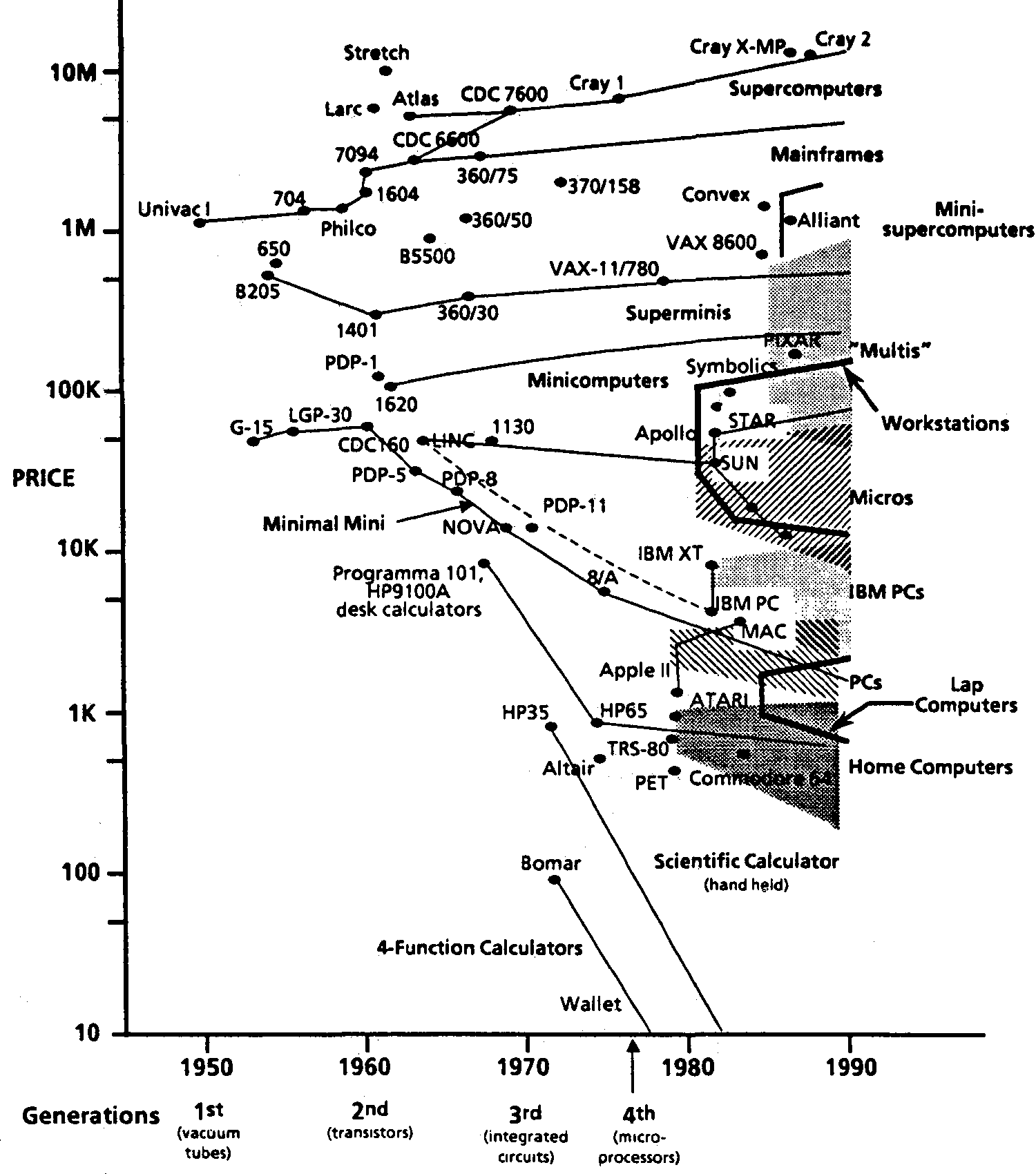
しかしその一方でBellは、p.8のFIGURE 1 Computer system prices at introduction and Classes versus timeにおいて、Personal Workstationを、Altair, AppleII, TRS-80, Pet2001, Commodore 64などのHome Computersや、IBM PCsとは異なる製品カテゴリーとして、Workstationを位置づけている。Workstationに属するマシンとしては、StarやSUNなどのマシンをあげている。
しかもBell(1988)は、p.8のFIGURE 1においてWorkstation製品セグメントをminicomputer製品セグメントの派生的セグメントとして位置づけている。
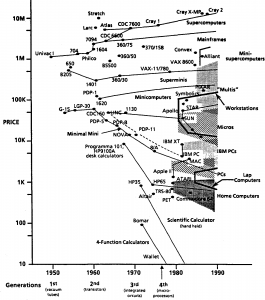
さらにまたBellは、Personal Computing用マシンをPCと定義する立場に立ちながらも、Home Computersや、IBM PCsといった製品カテゴリーを、Personal Workstationとは異なる製品カテゴリーとするとともに、Home Computersや、IBM PCsといった製品群の歴史的ルーツをAlto(1973)には求めていない。
b. Workstationの二つの源流としての、TSS端末とPC
杉田忠靖(1990)「パーソナルコンピュータとワークステーション」田丸啓吉・山中和正編『パソコン・マイコン百科』朝倉書店、pp.143-153は、「今日のワークステーションが生まれるに至る背景には、コンピュータのTSS端末の流れと、パーソナルコンピュータの発展の流れに遡る必要がある。」(p.148)として、「TSS端末と分散処理用コンピュータが一体化」(p.149)したものとしてのワークステーションと、「パーソナルコンピュータの上位イメージ」(p.149)としてのワークステーションという二つの流れで理解すべきだ、としている。
(4)「最初のPC」=「Intel8008を用いたマシン」とする主張
Helmers, C.T.(1975a) “The Impossible Dream,” Byte, Issue 1, September 1975, p.6
Helmers(1975a)p.6は、「パーソナル・コンピュータを持つ」という昔からの夢(old dream of “having a personal computer.” )は、Intelの8008などのマイクロプロセッサの登場により実現可能になった、と記している
Helmers, C.(1975b) “The State of The Art,” Byte,Issue 3, November 1975, pp.6-7, p.88
Helmers(1975b)は、Small Computer分野の中の、Home Computer分野に対応したマシンに関して下記のように述べるとともに、Altairのインパクトの大きさを認めながらも、Intel8008を用いたマシンを第1世代のPCとし、そうした第1世代の「パーソナルコンピュータ・システムの第一世代」(the “first generation” personal computer systems)の後に、Intel 8080を使用したMITSのAltairが登場したとしている。
「Byteのような雑誌が存在可能であるという事実(同雑誌が熱狂的に受け入れられていることをさておき)は、home computer分野において最近1、2年の間にかなりの変化が生じたということの証拠である。」(The fact that a magazine such as BYTE can even exist (let alone get its enthusiastic reception) is evidence of the considerable changes which have occurred in the home computer field over the past year or two.)p.6
「8008を用いたコンピュータキット製品の最初の波、および、その第一世代のパーソナルコンピュータシステムの勃興後の1975年には、同じ600ドルでもっと数多くの機能[を持った製品]を買うことができるようになった。1975年に、我々はMITSのAltairの登場を見たのである。」(p.6)(But now, in 1975 after the first wave of 8008 computer kit products and the rising tide of the “first generation” personal computer systems, that same $600 can buy a lot more function. In 1975 we saw the introduction of the MITS ALTAIR)
1. 「Mark-8 (1974)」説
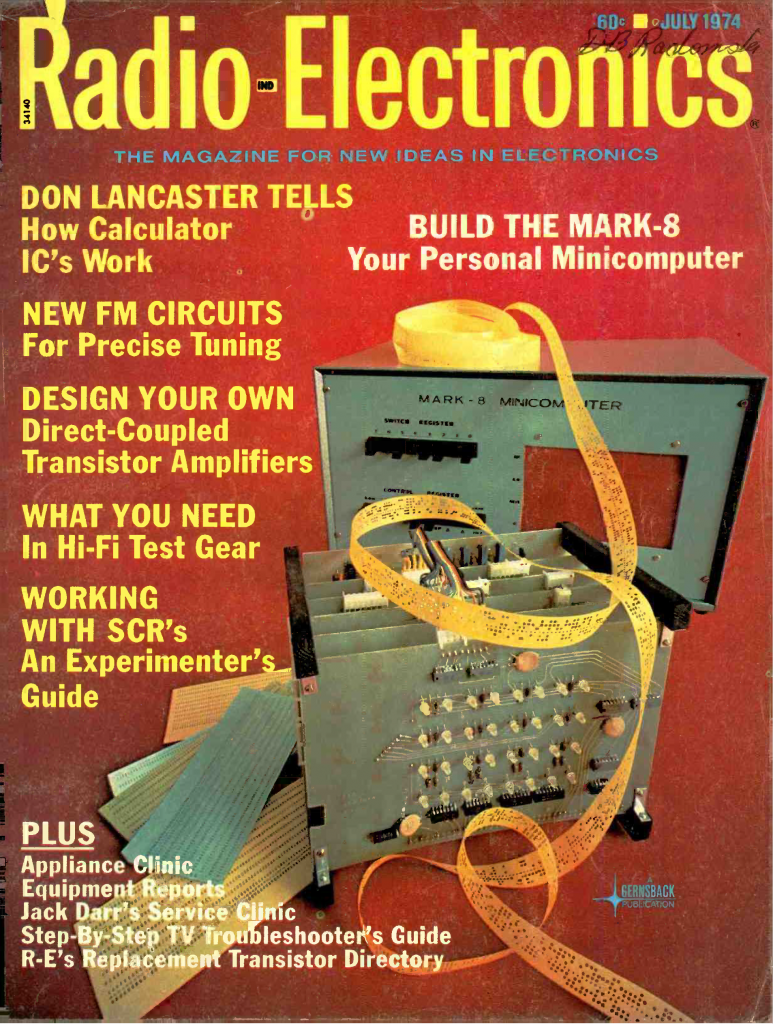
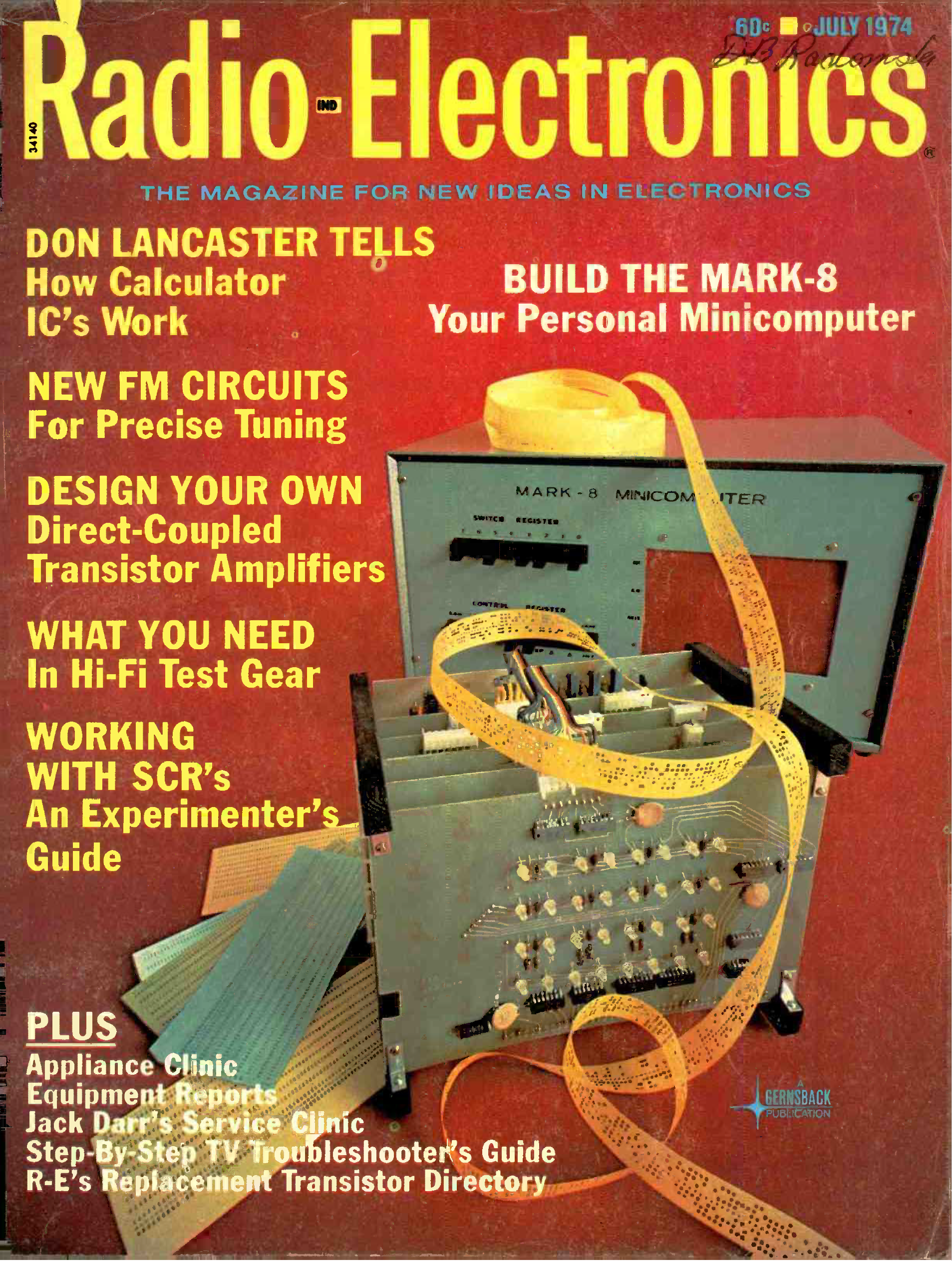
キット型製品であるが、Radio Electronics誌の1974年7月号の表紙には右のように、”Build the Mark-8, Your Personal Minicomputer”と銘打たれて「個人用ミニコンピュータ」とされている。
2. 「フランスのRéalisation d’Études Électroniques 社(以下、R2Eと略)のMicral N(1973)」説
Fagginの見解
Faggin(1984) “Interview : Federico Faggin,”
Computerworld, July 30 1984,p.6の見解
最初にマイクロコンピュータをつくった企業はフランスの会社R2Eである。その後、IMSAIやMITSといった他の会社が探し求めていた製品を導入した。それらの会社が、原始的なOSを備えた小さな、本来的なマイクロコンピュータを造り上げたのである。/[ただし]その市場は主としてホビイストのためのものであり、強力なソフトウェアはまだ存在していなかった。(The first company to produce a microcomputer was a French company, RPE. Then other companies like [IMSAI. Inc.] and Mits introduced products that were solutions looking for a problem. They produced small, generic microcomputers with primitive operating systems./The market was primarily for hobbyists, and powerful software was nonexistent.)
Fagginは上記引用でフランスの会社RPEとしているが、これはR2E (Réalisation d’Études Électroniques)の間違いと思われるので、訳文ではR2Eとした。
Micral Nに関する説明
Micral N(1973)は、完成品型製品であり、アセンブラーをROMで提供しており、テレタイプでプログラム入力できた。そうした意味でアセンブリ言語という低級言語ではあるが、プログラム動作ができた低価格のコンピュータである。
なおR2E社は、Micral N(1973)に引き続き、1974年には、Intel 8008の動作周波数をMicral Nの2倍の1MHzにしたMicral G、および、Intel 8080を採用したMicral Sを出している。
なおRéalisation d’Études Électroniques (1974b) Micral S Microcomputer Handbook, p.18によれば、Micral Sは、Micral N用に書かれたプログラムを動作させることができた。
[https://ia601605.us.archive.org/15/items/bitsavers_r2eMICRALSokAug74_2516150/MICRAL_S_Microcomputer_Handbook_Aug74.pdf]
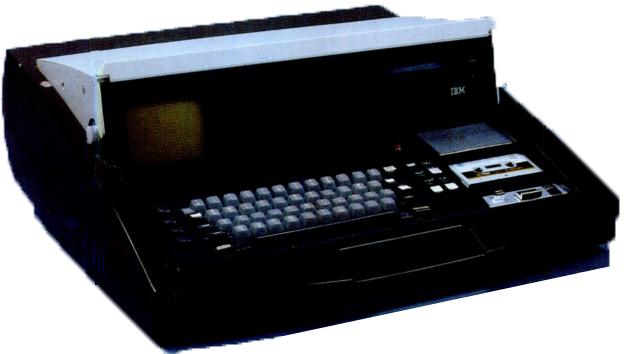
(5) Personal Computing用マシン、Portable Personal Computerの「IBM 5100 portable Computer(1975)」説
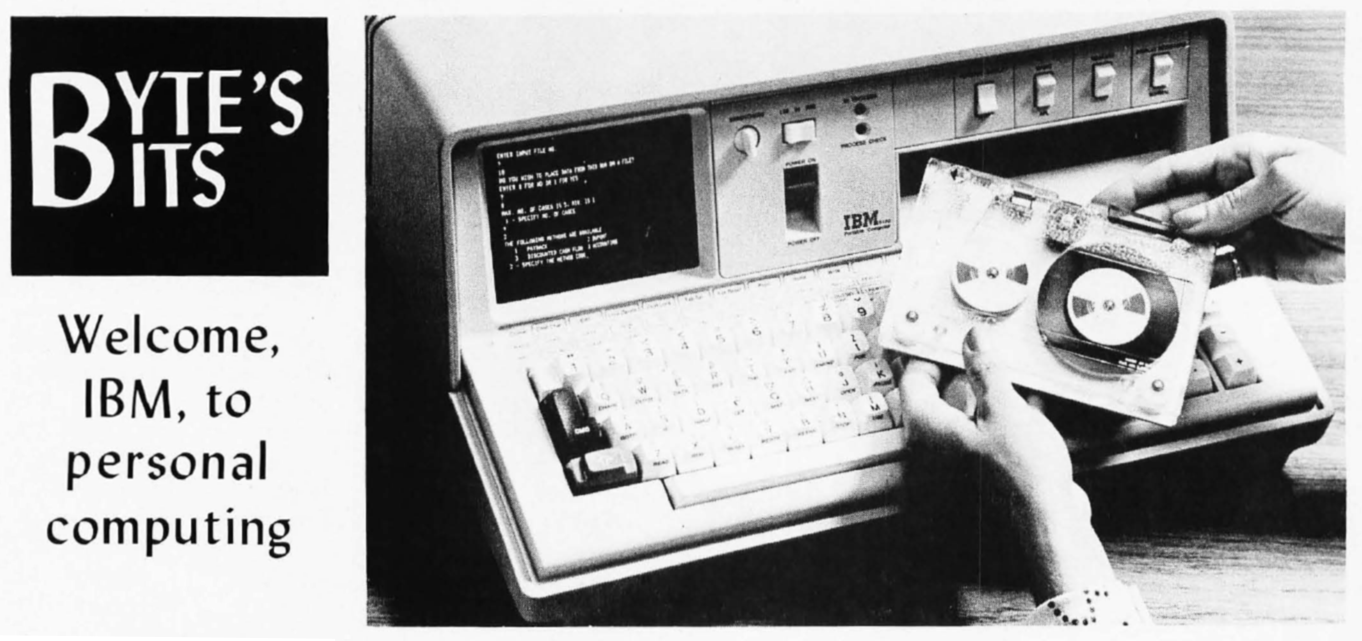
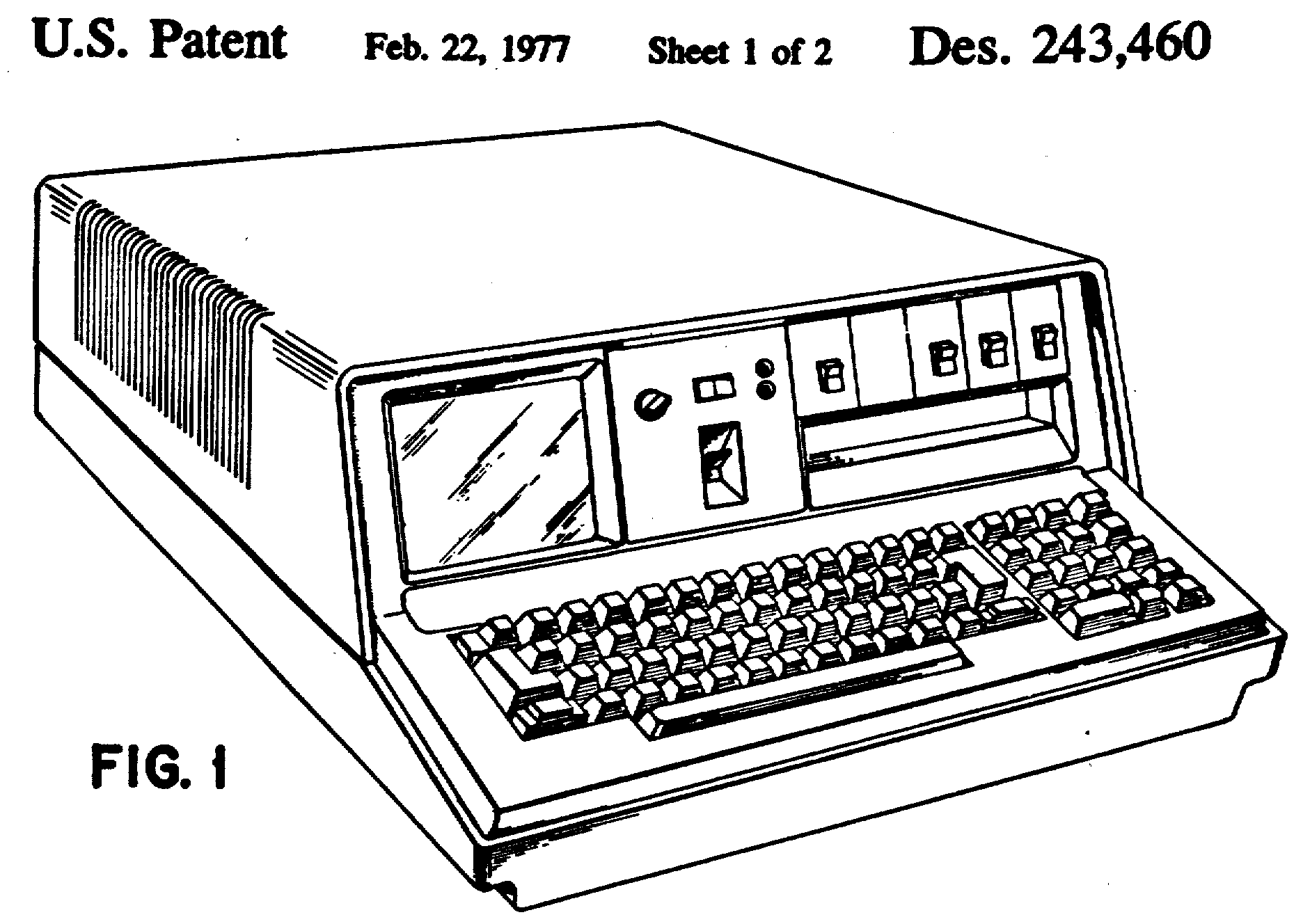
IBM は、IBM 5100 portable Computer (1975)に関連して、1975 年 8 月 7 日には「The ornamental design for a portable personal computer」というclaimの特許(USD 243460)を「Portable Personal Computer」というタイトルで申請している。
1975年9月9日に記者発表されたIBM 5100は、$8,975から$19,975と個人が気軽に買える価格ではなかった(内蔵メモリ量や付属の開発プログラミング言語ソフトウェアによって価格が異なる)が、その外形寸法が 44.4cm×20.3cm×61.0cmで、重量は23kgと現代のタワー型デスクトップPCとほぼ同じ大きさ、重量であった。なおかつ下記の写真にあるように、personal computing用マシンとして位置づけられていた。
本マシンに関連するIBMの特許申請書のタイトルは、「Portable Personal Computer」となっているが、このマシンはその当時は、microcomputerとも、personal computerとも一般には呼ばれてはいない。
しかしpersonal workstationも、personal computerの一種であるとする立場からは、Alto(1973)と同じくIBM 5100(1975)もPCの系譜に位置づけるべきことになる。
IBM 5100をPCとする主張
Smith, E.(1999,2004)は、世界最初のPCとは記載していないが、”Introduced in 1975, the 5100 was IBM’s first production personal computer (six years before the PC!).”というように、IBM 5100がIBM最初のPC製品である、と主張している。
また Roberson(1976,p.994) は、世界最初のPCとも、IBM最初のPCとも書いていないが、「IBM5100の背景にある重要な設計哲学はpersonal computerというコンセプトであった」(The key design philosophy behind the 5100 was the concepto f a “personalc omputer,” or one whicihs operated by and for the person wishing to solve a problem.)としている。
(6) MicrocomputerとPersonal Computerの区別論 — 最初のPC=「IBM Personal Computer(1981)」説
Campbell-Kellyほか(2015)は、コンピュータの時代区分を下記のように4区分し、Personal Computer時代を1980年からとしている。(p.2およびpp.6-7)
第1期 1950-1965 Computerの商用利用の開始(the beginning of the commercial exploitation of the computer and the emergence of the first major players in the industry) :「標準なき時代」(“era of no standards”)
第2期 1965-1980 IBM System 360ファミリーの到来(the arrival of the IBM System/360 computer family): 「IBM System 360 標準の時代」(“era of the IBM System/360 standard”)
第3期 1980-1995 Personal Computerの出現(the emergence of the personal computer):「IBM PC 標準の時代」(“era of the IBM PC standard”)
第4期 1995-2010 インターネットの商用的発展(the commercial development of the Internet):「複数標準の時代」(“era of the multiple standards”)
Campbell-Kellyほか(2015)は、第2期 1965-1980に、minicomputer, small business computer, microcomputerが出現した、とするとともに、microcomputerとは別にpersonal computerを位置づけている。
Campbell-Kelly, M.,Garcia-Swartz, D.D.(2015) From Mainframes to Smartphones: A History of the International Computer Industry , (Critical Issues in Business History), Harvard University Press





![[図の出典]内田洋行の1958年のカタログ[電卓ミュージアム所蔵、http://www.dentaku-museum.com/calc/calc/2-casio/1-casiod/br/b-1.jpg]](https://web.archive.org/web/20120327193018/www.dentaku-museum.com/calc/calc/2-casio/1-casiod/br/b-1.jpg)